Science & Space
Planets, elements, and the universe by the numbers.

The Most Distant Human-Made Objects from Earth
The ten spacecraft farthest from Earth on November 9, 2026, among those with published NASA/JPL Horizons trajectories. Voyager 1 leads at 25.88 billion km (173 AU), ahead of Voyager 2 and the silent Pioneer 10. Distances grow daily; the order is stable.
View ranking →
The Largest Asteroids and Dwarf Planets in the Solar System
Pluto is the widest dwarf planet at about 2,377 km, just ahead of Eris, while Ceres leads the asteroid belt at 939 km. The largest dwarf planets, candidates and asteroids ranked by mean diameter.
View ranking →
The Closest Stars to the Sun
Proxima Centauri, the two Alpha Centauri stars and Barnard's Star are the Sun's nearest neighbours; 18 stars and brown dwarfs lie within 11 light-years, ranked by Gaia-based distance as of November 2026.
View ranking →
The Largest Moons in the Solar System
Jupiter's Ganymede is the largest moon in the Solar System, wider than Mercury, ahead of Saturn's Titan and Jupiter's Callisto: 15 moons ranked by mean diameter.
View ranking →
The Largest Volcanic Eruptions in History
Kikai's Akahoya eruption and Argentina's Cerro Blanco lead at about 170 km³ of tephra each, ahead of Tambora in 1815: 12 Holocene eruptions of VEI 7, plus VEI 6 since 1800, ranked by bulk tephra volume with date, VEI and location.
View ranking →
The Strongest Tropical Cyclones on Record
Typhoon Tip's 870 hPa in 1979 is the lowest central pressure ever recorded in a tropical cyclone, ahead of Hurricane Patricia (872) and Typhoons June and Nora (875): 17 storms from every basin, ranked as of October 23, 2026.
View ranking →
The Deepest Ocean Trenches in the World
The Mariana Trench's Challenger Deep, about 10,935 m down, leads 14 ocean trenches ranked by maximum known depth, ahead of Tonga's Horizon Deep and the Philippine Trench. Depths are sonar and pressure estimates with sourced error.
View ranking →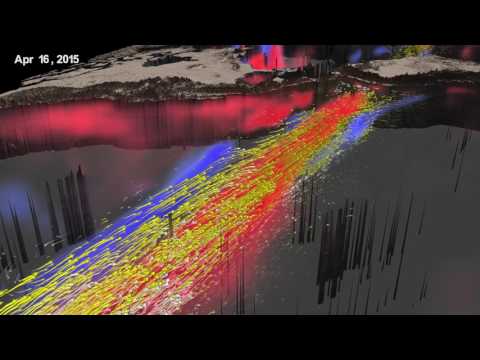
The Strongest El Niño Events on Record
Ranked by peak Oceanic Niño Index, the 2015–16 El Niño tops 16 events since 1950 at +2.8 °C, ahead of 1997–98 and 1982–83. Data are NOAA's ERSST.v5 ONI through AMJ 2026.
View ranking →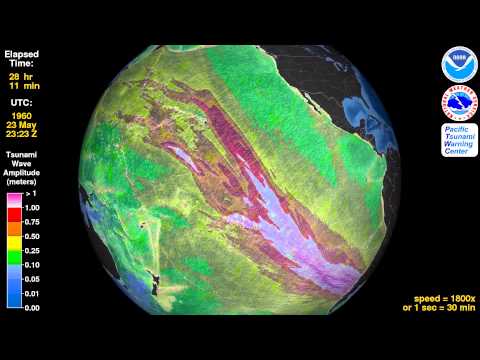
The Largest Earthquakes Ever Recorded
The largest earthquakes ever recorded, ranked by moment magnitude from the USGS list: Valdivia, Chile (Mw 9.5, 1960) leads Alaska 1964 (9.2) and a tie at 9.1 for Sumatra 2004 and Tōhoku 2011. As of October 13, 2026.
View ranking →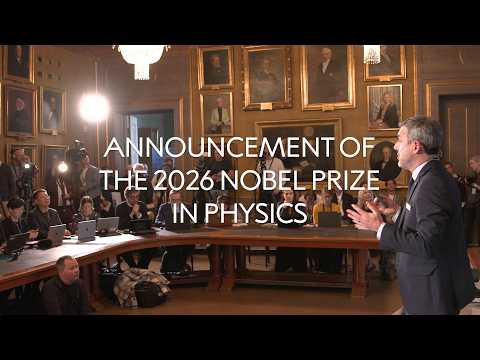
The Countries with the Most Nobel Prizes
Which countries have produced the most Nobel Prize laureates? The United States leads with 429 through the 2026 announcements, ahead of the United Kingdom (144), Germany (116) and France (79), with a breakdown by prize.
View ranking →
The Largest Optical Telescopes in the World
Operating optical and infrared telescopes ranked by effective aperture, from the 11.8 m Large Binocular Telescope to the 10.4 m Gran Telescopio Canarias and the twin 10 m Keck telescopes, plus JWST in space.
View ranking →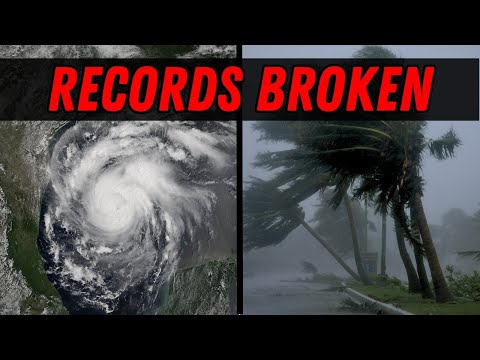
The Strongest Atlantic Hurricanes on Record
Atlantic hurricanes ranked by lowest minimum central pressure, from the National Hurricane Center's records, as of October 9, 2026. Wilma's 882 millibars in 2005 is the record, and the whole list is made up of Category 5 storms.
View ranking →