Science & Space
The Tallest Volcanoes in the Solar System
Olympus Mons on Mars stands about 21.9 km above its surrounding plains, more than twice Mauna Kea's 10.2 km from the Pacific seafloor. Here are 14 volcanoes on Mars, Earth and Venus ranked by height above their base, as of 19 November 2026.
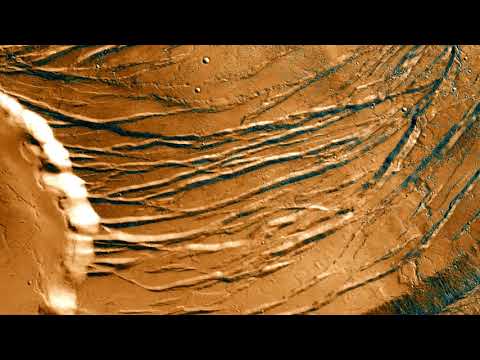
Pictured: a fly-over video of Olympus Mons on Mars, #1 with about 21.9 km of height above its base.
How we rank: the main column is a volcano's height above its own base: the surrounding plains on Mars and Venus, the ocean floor for island volcanoes on Earth. It is not elevation above sea level, and the two are not the same. Mars has no sea, so its second column is height above the datum used by NASA's Mars Orbiter Laser Altimeter, and Venus's is height above its mean surface; Earth's is height above sea level. A dash means no source we opened gave a figure. The Mars heights come from Plescia (2004) as compiled in Wikipedia's list, and we could not open the paper itself[1][2]. Sources disagree, sometimes by a lot, on where a base lies: Olympus Mons is 21.3 km above datum, 21.9 km above its plains and up to 26 km above Amazonis Planitia[3]. For Earth's Mauna Loa the USGS counts about 17 km by adding the crust its weight has pushed down[10]; we use the roughly 9 km to the surrounding seafloor. We left out Io, because we found no firm height for any Io volcano; the only entry for it in the Wikipedia list is an approximate, unnamed 2.5 km peak[1]. We trimmed the list to 14 volcanoes with a published height rather than pad it. As of 19 November 2026.
The Top 10
#1
Olympus Mons — 21.9 km
Olympus Mons on Mars stands about 21.9 km above its surrounding plains in Plescia's 2004 laser-altimeter survey, the most of any volcano we could source.[1][2] Measured instead from the Mars Orbiter Laser Altimeter datum, its summit is 21.287 km high, and Comins (2012) puts the climb from Amazonis Planitia at about 26 km, so the spread is a choice of base, not a disagreement about the summit.[3] It is about 600 km wide, ringed by a cliff up to 8 km tall, and its summit holds nested calderas forming a depression about 60 by 80 km.[3] NASA's Mars facts page gives a much larger base-to-summit figure of more than 25 miles (40 km); we treat that as an outlier and do not use it.[4]
#2
Ascraeus Mons — 14.9 km
Ascraeus Mons, the northernmost of the three Tharsis Montes, rises about 14.9 km above its base on Plescia's figures, and Murray et al. (2008) give an average vertical relief of about 15 km.[1][5] Its summit is listed at 18.1 to 18.2 km above the Mars datum, higher than its relief because the surrounding plains average about 3 km above datum.[5] The edifice is roughly 480 km across, with a central caldera about 24 km wide and 3.4 km deep.[5]
#3
Elysium Mons — 12.6 km
Elysium Mons, on the other major volcanic province of Mars, stands about 12.6 km above its base, per Plescia (2004).[1][6] Wikipedia's text gives its summit as about 14.1 km above the datum, though its infobox lists 16 km and does not explain the difference, so we show the cited 14.1 km.[6] The volcano is about 240 km across with a summit caldera about 14 km wide.[6]
#4
Arsia Mons — 11.7 km
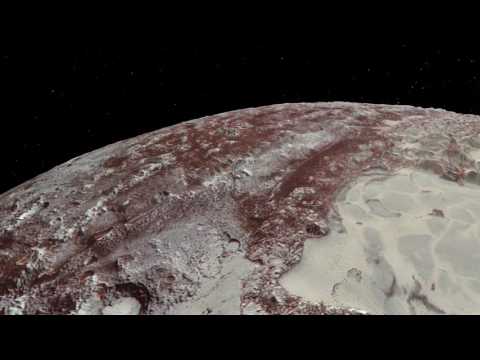
Arsia Mons, the southernmost Tharsis Mons, is listed at 11.7 km above its base in the compilation that draws on Plescia (2004).[1] A NASA JPL image caption cited on Wikipedia puts it at more than 9 km above its surroundings, so the true figure depends on where the base is drawn.[7] The volcano is about 435 km across and has a summit caldera about 110 km wide.[7] The video embedded here is titled as a NASA view of Arsia Mons through water-ice clouds.
#5
Mauna Kea — 10.2 km
Mauna Kea in Hawaiʻi is the tallest volcano on Earth measured from its base. The USGS says it extends about 6,000 m below sea level to the ocean floor, for a total height of nearly 33,500 ft (10,211 m), with about 4.2 km of that above the waves.[8] That makes it taller than Mount Everest, which NASA gives as 8,848 m above sea level.[4] Wikipedia notes that estimates of its full height range from 9,966 m to 17,205 m depending on where the base is placed.[9] We use the USGS seafloor-to-summit figure.
#6
Mauna Loa — 9.2 km
Mauna Loa's summit is 4,169 m above sea level, and its submarine flanks descend roughly another 5 km to the seafloor, which is where our 9.2 km comes from.[10][11] The USGS also states a larger figure of about 17 km above its base, but that adds about 8 km by which the volcano's weight has pushed down the crust beneath it, which is not a height anyone can stand beside.[10] Wikipedia puts Mauna Kea's summit about 38 m higher.[9] Mauna Loa is the more massive of the two neighbours.[9]
#7
Haleakalā — 8.5 km
The National Park Service says Haleakalā on Maui still stands about 28,000 ft (8,534 m) above the sea floor after losing height over time, which it calls the third-tallest mountain on Earth.[12] Its summit, Puʻu ʻUlaʻula, is 10,023 ft (3,055 m) above sea level.[13] Some non-NPS websites give about 9.1 km, but we found no park page that says so and use the NPS figure.[12]
#8
Pavonis Mons — 8.4 km
Pavonis Mons, the middle volcano of the Tharsis Montes, stands about 8.4 km above its base on Plescia's figures.[1] It is about 375 km across with flank slopes averaging only 4 degrees, and its main caldera is 47 km wide and almost 5 km deep.[14] Wikipedia's article is not internally consistent on its height, giving an infobox peak of 8.7 km and also saying it stands 14 km above Mars's mean surface level, so we show 14 km as an approximate summit elevation only.[14]
#9
Pico del Teide — 7.5 km
UNESCO describes Teide, on Tenerife in the Canary Islands, as rising 7,500 m above the ocean floor and as the world's third-tallest volcanic structure, with its summit 3,718 m above sea level.[15] It is the only stratovolcano in this table; the others are shield volcanoes, which are broad and gently sloped. It is the shortest of our Earth entries measured from its base.
#10
Alba Mons — 7.1 km
Alba Mons is the widest volcano here, about 2,000 km north to south, but also one of the lowest.[16] Wikipedia gives its peak as 6.8 km above the Mars datum, citing Carr (2006), and relief of about 7.1 km on its north side but only about 2.6 km on its south side, because it straddles the boundary between the northern lowlands and southern highlands.[16] A separate Wikipedia article gives its central edifice as only 1.5 km high, so this is the least certain row in the table and we rank it on the north-side relief.[18]
Ranks 11 to 14
Maat Mons on Venus is the highest volcano on that planet in our sources: NASA's Magellan caption says it rises almost 5 km above the surrounding terrain and about 8 km above the mean surface.[17] Hecates Tholus and Albor Tholus, two volcanoes in Mars's Elysium region, are listed at 4.8 km and 4.1 km high from Carr (2006), though a Mars Express-based figure for Albor Tholus is 4.5 km.[18][19] Sif Mons on Venus rises about 2 km from its base on a main structure 210 km wide, with a lava apron reaching much farther.[20]
Sources
- Wikipedia, “List of tallest mountains in the Solar System” (main source for the Mars and Venus heights, with its cited papers; its other-body entries are not used.)
- USGS record for Plescia (2004), “Morphometric properties of Martian volcanoes” (J. Geophys. Res.; laser-altimeter height of Martian volcanoes; we saw the record, not the full paper.)
- Wikipedia, “Olympus Mons” (21.287 km MOLA summit height, 21.9 km and 26 km relief, size, caldera.)
- NASA Science, Mars facts (Olympus Mons outlier figure; Mount Everest's 8,848 m.)
- Wikipedia, “Ascraeus Mons” (datum height, relief, caldera.)
- Wikipedia, “Elysium Mons” (12.6 km above base, 14.1 km above datum, size.)
- Wikipedia, “Arsia Mons” (size, caldera, and a NASA JPL caption saying more than 9 km above its surroundings.)
- USGS, “How big are Hawaiian volcanoes?” (Mauna Kea 4,205 m above sea level, 10,211 m in total.)
- Wikipedia, “Mauna Kea” (range of base-height estimates, comparison with Mauna Loa.)
- USGS, Mauna Loa (4,169 m summit and the 17 km figure including crustal depression.)
- USGS, “Volcano Watch: How high is Mauna Loa?” (summit 4,170 m and the roughly 5 km of submarine flank, as shown in search results.)
- National Park Service, “Geology of Haleakalā” (28,000 ft, 8,534 m above the sea floor, as shown in search results.)
- Wikipedia, “Haleakalā” (summit elevation 3,055 m.)
- Wikipedia, “Pavonis Mons” (size, caldera, slopes, conflicting height figures.)
- UNESCO World Heritage Centre, Teide National Park (7,500 m above the ocean floor and 3,718 m above sea level, as shown in search results.)
- Wikipedia, “Alba Mons” (datum height, north and south relief, size.)
- NASA Photojournal PIA00106, “Venus – 3-D Perspective View of Maat Mons” (almost 5 km above surrounding terrain, 8 km above mean surface.)
- Wikipedia, “Volcanology of Mars” (Hecates Tholus 4.8 km and Albor Tholus 4.1 km from Carr 2006; Alba Mons central edifice height.)
- Wikipedia, “Albor Tholus” (4.5 km figure from FU Berlin HRSC imagery.)
- Wikipedia, “Sif Mons” (about 2 km high, 210 km main structure, from Stofan et al. 2001.)
- Video: the Olympus Mons fly-over (YouTube uploader Karol Masztalerz) and the Arsia Mons video (NASA News Now channel); no embed for the other entries because we could not confirm an official video for each.