#1
Jupiter — 142,984 km
More massive than every other planet in the Solar System combined — by about two and a half times. Its Great Red Spot, a storm larger than Earth, has been raging for centuries.[1]
Gas giants dwarf the rest — Jupiter's diameter alone is more than eleven times Earth's.
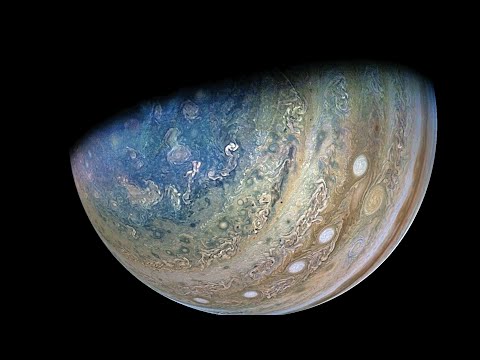
Pictured: Jupiter, #1 at 142,984 km across.
| Rank | Planet | Diameter | Type |
|---|---|---|---|
| 1 | Jupiter | 142,984 km | Gas Giant |
| 2 | Saturn | 120,536 km | Gas Giant |
| 3 | Uranus | 51,118 km | Ice Giant |
| 4 | Neptune | 49,528 km | Ice Giant |
| 5 | Earth | 12,742 km | Terrestrial |
| 6 | Venus | 12,104 km | Terrestrial |
| 7 | Mars | 6,779 km | Terrestrial |
| 8 | Mercury | 4,880 km | Terrestrial |
No matching rows.
More massive than every other planet in the Solar System combined — by about two and a half times. Its Great Red Spot, a storm larger than Earth, has been raging for centuries.[1]
Famous for its rings of ice and rock, Saturn is also the least dense planet in the Solar System — less dense than water, meaning it would float given a large enough bathtub. It also has more confirmed moons than any other planet in the Solar System, including Titan, the second-largest moon overall and the only one with a substantial atmosphere.[1]
Rotates almost completely on its side, with an axial tilt of about 98 degrees — likely the result of an ancient collision. It also has the coldest planetary atmosphere in the Solar System.[1]
The windiest planet in the Solar System, with recorded wind speeds over 2,000 km/h. It takes about 165 Earth years to complete a single orbit of the Sun.[1]
The only terrestrial planet still geologically active with plate tectonics — and, as far as we know, the only planet anywhere with confirmed life. Its single large moon is thought to have formed roughly 4.5 billion years ago, when a Mars-sized body called Theia collided with the young Earth and blasted debris into orbit.[1]
The hottest planet in the Solar System, even hotter than Mercury, thanks to a runaway greenhouse effect that traps heat under a thick carbon dioxide atmosphere pressing down at roughly 90 times Earth's surface pressure. It also spins backward relative to most planets, and so slowly that a single Venusian day lasts longer than its entire year around the Sun.[1]
Home to Olympus Mons, the largest volcano in the Solar System, roughly two and a half times the height of Mount Everest. Its rust-red color comes from iron oxide covering the surface.[1]
The smallest planet since Pluto's reclassification as a dwarf planet in 2006. Despite being closest to the Sun, it has almost no atmosphere to hold in heat, so temperatures swing from over 400°C by day to below −180°C at night.[1]