Geography & Countries
The Deepest Lakes in Asia
Ranked strictly by maximum depth, not surface area — Asia holds the world's single deepest lake, Siberia's Lake Baikal, along with rift lakes, volcanic calderas, and one earthquake-dammed reservoir in the Pamirs.
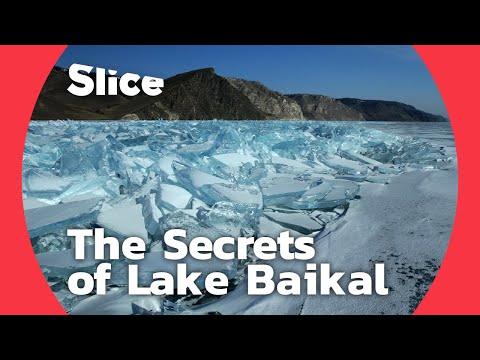
Pictured: Lake Baikal in Siberia, Russia, #1 at 1,642 m deep.
The Top 10
#1
Lake Baikal — 1,642 m
Not just Asia's deepest lake but the world's, and the world's oldest at 25–30 million years old — its rift-valley basin is still widening by about 2 cm a year. It holds around one-fifth of all the unfrozen fresh water on Earth's surface, and is home to the Baikal seal, or nerpa, the only seal species that lives exclusively in fresh water.[1]
#2
Caspian Sea — 1,025 m
The world's largest inland body of water, bordered by five countries and classified by geographers as a giant salt lake rather than a true sea since it has no outlet to the open ocean. Its water level has been falling for decades as climate change and upstream damming reduce inflow, a decline that could reach several metres by 2100 and strand the offshore oil and gas infrastructure built on its enormous reserves.[1]
#3
Issyk-Kul — 668 m
The world's second-largest mountain lake by area, ringed by the snow-capped Tian Shan range; despite sitting at over 1,600 m elevation, it never fully freezes — its name translates to "warm lake." In 2025, divers confirmed the ruins of a medieval Silk Road settlement submerged near its northwestern shore after a 15th-century earthquake, complete with brick buildings, a necropolis, and what may have been a mosque.[1]
#4
Lake Matano — 590 m
The deepest lake in Southeast Asia and on any island worldwide, with such exceptional clarity that its remarkably isolated fish and snail species are studied as a real-world example of rapid evolution. Its water is famously blue, colored by dissolved minerals rather than algae, and it drains into the Larona River, which powers a hydroelectric plant feeding a nearby nickel-processing operation.[1]
#5
Lake Toba — 505 m
The world's largest volcanic lake, filling the caldera of a supervolcano that erupted roughly 74,000 years ago; the island of Samosir sitting in its center is nearly as large as all of Singapore. Some researchers have argued the eruption triggered a global "volcanic winter" severe enough to push early humans to the brink of extinction, though newer archaeological evidence has cast doubt on how close that call really was.[1]
#6
Sarez Lake — 505 m
Formed in 1911 when a massive earthquake-triggered landslide dammed the Murghab River, Sarez sits behind the Usoi Dam, the tallest landslide dam on Earth — and is watched closely as one of the world's most serious outburst-flood hazards. Roughly five million people live downstream along the rivers it could flood, so the lake is now fitted with an automated monitoring network and sirens that can broadcast an evacuation warning as far as 300 km away.[1]
#7
Lake Van — 451 m
The world's largest soda lake, so alkaline that only one fish species can survive in it; the 10th-century Armenian church on Akdamar Island sits just offshore, one of the region's most striking landmarks. That one fish, the pearl mullet, can't reproduce in the lake's saline water at all, so each spring it migrates up to 24 km through freshwater tributaries to spawn.[1]
#8
Lake Poso — 450 m
Indonesia's third-largest lake and a hotspot of freshwater endemism in central Sulawesi, home to fish and snail species found nowhere else — a smaller, less-studied cousin of Lake Matano's evolutionary story. It's also the cultural heartland of the Pamona people, and sits just 50 km from the Palu-Koro fault, whose seismic activity has repeatedly disturbed the lake bed over the past 11,000 years.[1]
#9
Dead Sea — 304 m
The lowest point on Earth's land surface at roughly 430 m below sea level, and one of the saltiest bodies of water anywhere — nearly ten times saltier than the ocean, which is why nothing can live in it and swimmers famously float without effort. It's now shrinking by more than a metre a year as its main water source, the Jordan River, is diverted upstream for agriculture, and the retreating shoreline has left more than 6,000 sinkholes in its wake.[1]
#10
Lake Khövsgöl — 262 m
Holding around 70% of Mongolia's fresh water, Khövsgöl is nicknamed the "Mother Sea" and drains north into Russia's Lake Baikal watershed — its surface freezes thick enough each winter for trucks to drive across it. Geologists estimate it's at least 2 million years old, making it one of only a few dozen "ancient lakes" on Earth and part of the same rift system that formed Lake Baikal to its north.[1]
Sources
- Maximum-depth figures aggregated from lake-depth reference compilations and national geographic surveys. The Dead Sea's depth is measured from its current, shrinking water level and continues to decrease over time. Additional geological, ecological, and cultural background for each lake aggregated from national and academic geographic reference sources.