Geography & Countries
The Deepest Lakes in North America
Ranked strictly by maximum depth, not surface area — Lake Superior may dwarf the rest of the Great Lakes by size, but it isn't even the deepest lake on the continent; that title belongs to a remote lake in Canada's Northwest Territories.
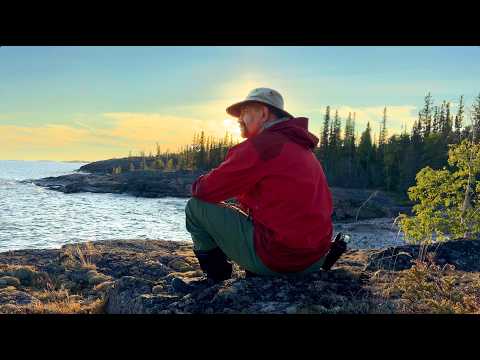
Pictured: Great Slave Lake in Canada’s Northwest Territories, #1 at 614 m deep.
The Top 10
#1
Great Slave Lake — 614 m
North America's deepest lake and the world's tenth-largest by area, in Canada's Northwest Territories; the territorial capital, Yellowknife, sits right on its northern shore. Its name comes from the Slavey, a term English-speaking fur traders applied to the Dene peoples of the region, and each winter its frozen surface becomes an ice road linking Yellowknife to nearby communities.[1]
#2
Crater Lake — 594 m
The deepest lake in the United States, filling the caldera left after Mount Mazama collapsed in a volcanic eruption roughly 7,700 years ago; it has no rivers flowing in or out, fed and drained solely by rain and snowmelt. That isolation makes it exceptionally clear: a Secchi disk test in 1997 recorded visibility to 142 feet, among the deepest clarity readings ever measured in a natural lake.[1]
#3
Quesnel Lake — 511 m
British Columbia's deepest lake and thought to be the deepest fjord lake in the world, carved by glaciers in the Cariboo Mountains and still fed by their meltwater today. In August 2014, a tailings dam failure at the nearby Mount Polley mine sent millions of cubic metres of contaminated waste into the lake, the worst mining disaster in Canadian history.[1]
#4
Lake Tahoe — 501 m
Straddling the California–Nevada border in the Sierra Nevada, it's the largest alpine lake in North America and so clear that a white dinner plate remains visible dozens of meters below the surface. Geologists have dated it to roughly 2.3 million years old, making it the oldest lake in North America and the third-oldest on Earth, after Baikal and Tanganyika.[1]
#5
Adams Lake — 457 m
A long, narrow glacial lake in British Columbia's Shuswap region, second only to Quesnel among the province's deepest lakes, and famous among anglers for its landlocked rainbow trout. It feeds the Adams River, whose sockeye salmon run — one of the largest in North America — turns the water red with fish every four years during what's called a "dominant year."[1]
#6
Lake Chelan — 453 m
A 50-mile glacially carved fjord lake in central Washington, Chelan is so deep that its lower reaches drop below sea level, and the remote town of Stehekin at its northern end is reachable only by boat, floatplane, or trail. It's the third-deepest lake in the U.S., after Crater Lake and Lake Tahoe, carved by two arms of the Cordilleran ice sheet that converged from the northwest and southeast around 10,000 years ago.[1]
#7
Lake Superior — 406 m
The largest of the Great Lakes by both surface area and volume, holding roughly 10% of the world's surface fresh water — its cold, deep water is notorious for rarely giving up shipwrecks, immortalized in Gordon Lightfoot's ballad about the sunken Edmund Fitzgerald. It holds enough water to submerge all of North and South America under a foot of water, and its sheer size means it has fully frozen over only once in recent decades, in 1996.[1]
#8
Lake Pend Oreille — 350 m
Idaho's largest and deepest lake, its extreme depth and near-total quiet make it one of the U.S. Navy's key sites for testing submarine sonar and acoustic-stealth technology, far from any ocean. Its name is French for "ear pendant," likely a reference to the ear ornaments worn by the Kalispel people who lived along its shores when fur traders first arrived.[1]
#9
Atlin Lake — 289 m
The largest natural lake entirely within British Columbia, Atlin sits near the Alaska border and is fed by glaciers of the Coast Mountains, close to a former Klondike-era gold rush town that still bears the lake's name. Glacial meltwater flowing in from those same mountains, much of it now protected within Atlin Provincial Park, gives the lake and its inflows a distinctive turquoise color.[1]
#10
Okanagan Lake — 232 m
A long, glacially carved lake running through British Columbia's wine country, Okanagan is best known outside the region as the reputed home of Ogopogo, Canada's answer to the Loch Ness Monster. It stretches 135 km end to end and is spanned at Kelowna by the William R. Bennett Bridge, one of only a handful of floating bridges anywhere in the world.[1]
Sources
- Maximum-depth figures aggregated from lake-depth reference compilations, provincial/state geographic surveys, and the U.S. National Park Service (for Crater Lake). Additional geological, ecological, and cultural background for each lake aggregated from national and academic geographic reference sources.