Geography & Countries
The Deepest Lakes in the World
Ranked strictly by maximum depth, not surface area — Lake Baikal is a fraction of the Caspian Sea's size by area, yet plunges more than 600 meters deeper. These are the deepest lakes on the planet.
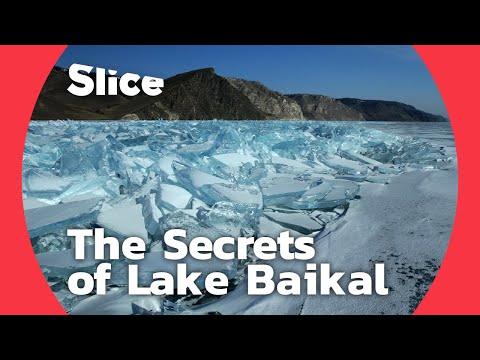
Pictured: Lake Baikal in Siberia, Russia, #1 at 1,642 m deep.
The Top 10
#1
Lake Baikal — 1,642 m
The world's deepest lake by a wide margin, and also its oldest at 25–30 million years and largest by freshwater volume — it holds roughly 20% of all the unfrozen fresh water on Earth's surface. It's also home to the Baikal seal, or nerpa, the world's only seal species that lives exclusively in fresh water.[1]
#2
Lake Tanganyika — 1,470 m
The world's longest freshwater lake, stretching over 670 km through four countries, and second only to Baikal in both depth and volume of fresh water held. At an estimated 9 to 12 million years old, it's also one of the world's oldest lakes, and its waters hold more than 200 cichlid fish species found nowhere else.[1]
#3
Caspian Sea — 1,025 m
The world's largest inland body of water by area, and technically classified by geographers as a giant salt lake rather than a true sea, since it has no natural outlet to the ocean. Rising evaporation has dropped its water level roughly two meters since the mid-1990s, threatening the sea's sturgeon population, source of most of the world's wild caviar.[1]
#4
O'Higgins/San Martín Lake — 836 m
Straddling the Chile–Argentina border in Patagonia (known as O'Higgins on the Chilean side, San Martín on the Argentine side), it's the deepest lake in the Americas, fed by glacial meltwater that gives it a milky turquoise color. Each country's name honors its own independence hero — Bernardo O'Higgins in Chile, José de San Martín in Argentina — and icebergs regularly calve into the lake from the O'Higgins Glacier at its western end.[2]
#5
Lake Malawi (Nyasa) — 706 m
An African Great Lake shared by three countries, home to more freshwater fish species than any other lake on Earth — most of them cichlids found nowhere else. British explorer David Livingstone reached its shores in 1859 and named it Lake Nyasa, though Portuguese traders had already visited more than a decade earlier.[1]
#6
Issyk-Kul — 668 m
One of the largest alpine lakes on Earth, cradled in Kyrgyzstan's Tian Shan mountains. Its name means "warm lake" in Kyrgyz — a nod to the fact that, despite the surrounding snowy peaks, its slightly saline water almost never freezes.[1]
#7
Great Slave Lake — 614 m
The deepest lake in North America, spanning Canada's Northwest Territories and giving rise to the Mackenzie River, the continent's second-longest. It's named for the Dene peoples historically known to European traders as the Slavey.[1]
#8
Crater Lake — 594 m
The deepest lake in the United States, filling the collapsed caldera left by the eruption of Mount Mazama roughly 7,700 years ago. With no rivers flowing in or out, it's fed entirely by rain and snow, giving it some of the clearest, bluest water of any lake on the list.[1]
#9
Lake Matano — 590 m
A tectonic lake on the Indonesian island of Sulawesi, and the deepest in Southeast Asia. Its remarkably clear, mineral-poor water has produced high levels of endemism, with several fish and invertebrate species found nowhere else on Earth.[1]
#10
General Carrera/Buenos Aires Lake — 586 m
Straddling the Chile–Argentina border in Patagonia — General Carrera on the Chilean side, Buenos Aires on the Argentine — it's the second-largest lake in South America. Its Chilean shore is home to the wind- and wave-carved Marble Caves.[1]
Sources
- Maximum-depth figures aggregated from lake-depth reference compilations and geography references (WorldAtlas depth rankings; national/park-service data where available, e.g. the U.S. National Park Service for Crater Lake), plus each lake's notable wildlife, age, and exploration history from geographic and conservation reporting.
- O'Higgins/San Martín Lake depth, naming history, and Patagonia geography per regional travel and geography references.