The ITU puts internet use across its Africa region at just 36% in 2025, the lowest of any world region, which leaves nearly two in three people there offline. By one September 2026 estimate, about 906 million Africans live within reach of a mobile broadband signal but still don't use the internet. A few countries are well ahead of the rest, though: these are the 15 with the highest share of their population online, using DataReportal's latest country figures.
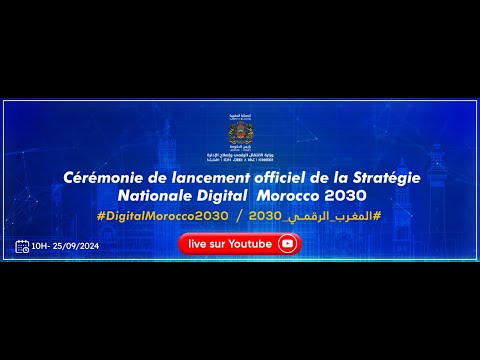
Pictured: the launch of Morocco’s Digital Morocco 2030 strategy, #1 with 92.2% of people online.
Rank
Country
Region
Internet penetration
Internet users
1
Morocco
North Africa
92.2%
35.5M
2
Libya
North Africa
88.5%
6.62M
3
Seychelles
East Africa
87.4%
~0.11M
4
Tunisia
North Africa
84.3%
10.4M
5
Egypt
North Africa
81.9%
96.3M
6
Botswana
Southern Africa
81.4%
~2.1M
7
South Africa
Southern Africa
79.6%
51.7M
8
Mauritius
East Africa
79.5%
~1.0M
9
Algeria
North Africa
76.9%
36.2M
10
Ghana
West Africa
74.6%
26.3M
11
Cabo Verde
West Africa
73.5%
0.39M
12
Gabon
Central Africa
71.9%
1.84M
13
Djibouti
East Africa
65.0%
~0.76M
14
Namibia
Southern Africa
64.4%
~1.9M
15
São Tomé and Príncipe
Central Africa
61.5%
~0.14M
No matching rows.
The Top 10
#1
Morocco — 92.2%
Some 35.5 million Moroccans were online by late 2025, giving the kingdom the highest internet penetration on the continent. Mobile does the heavy lifting: the country counts close to 57 million mobile connections, far more than its population, and with the phased rollout of 5G its average mobile download speed (about 60 Mbps) has edged past fixed broadband (about 55 Mbps).[1][5]
#2
Libya — 88.5%
Despite more than a decade of political division and conflict, about 6.6 million Libyans use the internet, nearly nine in ten people. The country also sat at the top of Africa in the ITU's 2024 ICT Development Index, alongside Morocco and Seychelles.[2][6]
#3
Seychelles — 87.4%
The Indian Ocean archipelago has only about 130,000 people, but almost nine in ten of them are online, the highest rate of any country outside North Africa. It joined Libya and Morocco at the head of Africa's field in the ITU's 2024 ICT Development Index.[2][6]
#4
Tunisia — 84.3%
About 10.4 million Tunisians use the internet, and 7.8 million are active on social media. The government has launched a 192-project plan meant to put all public services online by 2030.[1][7]
#5
Egypt — 81.9%
Egypt's online population of about 96 million is easily the biggest in this top 15, and nearly twice South Africa's. Mobile internet subscriptions reached 92.6 million in December 2025, while fixed broadband passed 12.9 million subscriptions in April 2026.[2][8]
#6
Botswana — 81.4%
Southern Africa's most connected country has about 2.1 million internet users. DataReportal counted roughly 1.48 million at the start of 2022, so the online population has grown by about two-fifths in a few years.[2][9]
#7
South Africa — 79.6%
Africa's most developed digital economy had 51.7 million internet users by October 2025, up from 50.8 million at the start of that year. That makes it the continent's second-largest online population in this ranking, behind Egypt.[1]
#8
Mauritius — 79.5%
About four in five Mauritians are online. Estimates for small island states vary by method: the Internet Society's Pulse puts the figure nearer 73%. From 2026, Mauritius also applies a 15% VAT to foreign digital services.[2][10]
#9
Algeria — 76.9%
Africa's largest country by area has about 36.2 million internet users. Algeria's telecom regulator ARPCE counted 59.1 million internet subscriptions in mid-2025, almost 89% of them mobile.[2][11]
#10
Ghana — 74.6%
Ghana leads West Africa and grew fastest among this top 10. DataReportal's 2026 figures show 26.3 million users (74.6%), up from 24.3 million (69.9%) a year earlier, a jump of nearly five percentage points.[1][12]
DataReportal (Kepios / We Are Social / Meltwater), Digital 2026 country reports, which use data as of October 2025, as reported in national coverage. Used for Morocco, Tunisia, South Africa and Ghana.
DataReportal's most recent penetration estimates (early-2025 baseline, largely ITU-derived) for countries without a published Digital 2026 update, as compiled in Statista's Internet penetration by country in Africa 2025 and The Star (Kenya)'s July 2026 infographic "Internet access in Africa: Top 15 countries", plus country user counts reported from DataReportal (Libya 6.62M, Egypt 96.3M, Algeria 36.2M, Gabon 1.84M, Cabo Verde 387,000). User counts marked "~" are estimates, calculated as penetration rate × latest population.
International Telecommunication Union, Measuring Digital Development: Facts and Figures 2025, for Africa-region internet use (36%) and the urban/rural gap. The ITU's "Africa" region does not include North Africa's Arab States.
September 2026 reporting (WeeTracker; CIO Africa) on Africa's mobile-internet usage gap: about 906 million people within mobile broadband coverage who remain offline.
Hespress and Morocco World News coverage of DataReportal's Digital 2026: Morocco report (35.5 million users, about 57 million mobile connections, mobile and fixed download speeds).
Reporting on the ITU ICT Development Index 2024, in which Libya, Morocco and Seychelles led African countries.
Ecofin Agency on Tunisia's 192-project plan to digitize public services by 2030, and DataReportal's Digital 2026: Tunisia (10.4 million users, 7.83 million social media users).
Egypt's Information and Decision Support Center (IDSC), via Zawya, on mobile internet subscriptions in December 2025, and April 2026 reporting on fixed broadband subscriptions.
DataReportal's Digital 2022: Botswana report (1.48 million internet users in January 2022), as reported by The Gazette (Botswana).
Internet Society Pulse country report for Mauritius, and Ecofin Agency on Mauritius's 15% VAT on foreign digital services from 2026.
ARPCE (Algeria's telecom regulator) internet observatory for Q2 2025, 59.10 million internet subscriptions.
Ghanaian tech press (TechLabari; The Labari Journal) on DataReportal's Digital 2026: Ghana report (26.3 million users, 74.6%).