As of 21 October 2026, Brunei’s sultan has led his country for 59.0 years, and 17 current national leaders have held their offices for more than 26 years. This ranking counts each country’s current head of state or government by uninterrupted time in office.
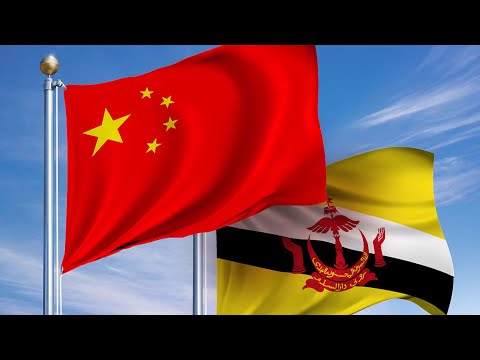
Pictured: a still from CGTN’s report on China’s president meeting Brunei’s Sultan Hassanal Bolkiah, #1 with 59.0 years in office.
Rank
Leader
Country
Office
Took office
Years in office (as of 2026-10-21)
Type
Government type
Region
How took office
1
Hassanal Bolkiah
Brunei
Sultan and Yang di-Pertuan (also prime minister)
5 October 1967
59.0
Monarch
Absolute monarchy
Asia
Hereditary: succeeded his father, who abdicated
2
Carl XVI Gustaf
Sweden
King
15 September 1973
53.1
Monarch
Constitutional monarchy
Europe
Hereditary: succeeded his grandfather
3
Teodoro Obiang Nguema Mbasogo
Equatorial Guinea
President
3 August 1979
47.2
President
Presidential republic
Africa
Military coup against his uncle; formally president since 12 October 1982
4
Paul Biya
Cameroon
President
6 November 1982
44.0
President
Presidential republic
Africa
Succeeded President Ahmadou Ahidjo, who resigned; prime minister before that
5
Yoweri Museveni
Uganda
President
29 January 1986
40.7
President
Presidential republic
Africa
Took power at the head of the National Resistance Army
6
Mswati III
Eswatini
King (Ngwenyama)
25 April 1986
40.5
Monarch
Absolute monarchy
Africa
Hereditary: chosen successor to his father, Sobhuza II
7
Hans-Adam II
Liechtenstein
Prince (reigning)
13 November 1989
36.9
Monarch
Constitutional monarchy
Europe
Hereditary: succeeded his father
8
Emomali Rahmon
Tajikistan
President
20 November 1992
33.9
President
Presidential republic
Asia
Elected chairman of the Supreme Soviet (then the top post) in 1992; president since 16 November 1994
9
Isaias Afwerki
Eritrea
President
24 May 1993
33.4
President
Presidential republic
Africa
Chosen by the transitional National Assembly at independence
10
Alexander Lukashenko
Belarus
President
20 July 1994
32.3
President
Presidential republic
Europe
Elected in the country's first presidential election
11
Letsie III
Lesotho
King
7 February 1996
30.7
Monarch
Constitutional monarchy
Africa
Hereditary: returned to the throne after his father's death (first reign 1990–95)
12
Denis Sassou Nguesso
Republic of the Congo
President
25 October 1997
29.0
President
Presidential republic
Africa
Took power at the end of the 1997 civil war (earlier term 1979–92)
13
Abdullah II
Jordan
King
7 February 1999
27.7
Monarch
Constitutional monarchy
Asia
Hereditary: succeeded his father, Hussein
14
Hamad bin Isa Al Khalifa
Bahrain
King (emir until 2002)
6 March 1999
27.6
Monarch
Constitutional monarchy
Asia
Hereditary: succeeded his father as emir
15
Ismail Omar Guelleh
Djibouti
President
8 May 1999
27.5
President
Presidential republic
Africa
Elected in 1999 as his uncle's successor
16
Mohammed VI
Morocco
King
23 July 1999
27.2
Monarch
Constitutional monarchy
Africa
Hereditary: succeeded his father, Hassan II
17
Paul Kagame
Rwanda
President
22 April 2000
26.5
President
Presidential republic
Africa
Elected by parliament after President Pasteur Bizimungu resigned
No matching rows.
Read this first: the table is current as of 21 October 2026 and ranks one leader per country: the head of state or head of government, whichever has served longer in that office without a break. Monarchs count as heads of state, so kings, a sultan and a prince appear alongside presidents. Years are the days from the date the leader took the office to 21 October 2026, divided by 365.2425. Only continuous service counts: a leader who left office and returned starts again on the return date (Letsie III of Lesotho reigned 1990–95 and again from 1996; Denis Sassou Nguesso of the Republic of the Congo was president 1979–92 and again from 1997). A leader who moved between offices is counted in the office held now (Vladimir Putin has been Russia’s president since 2012 and Recep Tayyip Erdoğan Turkey’s since 2014, so both fall below this table’s cut-off of 26 years). Where a leader’s uninterrupted rule began under an earlier title, that start date is used and the note says so (Obiang from 1979, Rahmon from 1992). Two leaders who would otherwise be on the list are not: Iran’s Ali Khamenei (supreme leader since 1989) was killed on 28 February 2026, and Norway’s King Harald V died on 28 August 2026; their successors have held office for weeks or months. The “How took office” column states only how each leader came to office. Rankings change when a leader dies, resigns or is removed, so the date matters; the table lists the top 17 of the world’s leaders and stops at 26 years.[1]
The Top 10
#1
Hassanal Bolkiah, Brunei — 59.0 years
Hassanal Bolkiah became the 29th Sultan of Brunei on 5 October 1967, when his father abdicated, and has been prime minister since Brunei regained full independence from Britain in 1984. At 59.0 years he is the longest-serving current national leader, ahead of Carl XVI Gustaf by almost six years. In 2025 he spent several days in a Kuala Lumpur hospital for fatigue and was discharged. The video is CGTN's report on his meeting with China's president.[1][2]
#2
Carl XVI Gustaf, Sweden — 53.1 years
Carl XVI Gustaf became King of Sweden on 15 September 1973, aged 27, and marked 50 years on the throne in 2023. Sweden's monarch is a purely ceremonial head of state, so he is the longest-serving leader here with no executive role; the 1974 constitution removed the monarch's formal political powers. The video is AP Archive's report on his 50th anniversary.[1][3]
#3
Teodoro Obiang Nguema Mbasogo, Equatorial Guinea — 47.2 years
Teodoro Obiang Nguema Mbasogo took power on 3 August 1979 by overthrowing his uncle, Francisco Macías Nguema, and has been formally president since 12 October 1982. His 47.2 years make him the longest-serving current leader who is not a monarch. He was re-elected in November 2022 with an official 94.9 percent of the vote for a term running to about 2029. This list counts his continuous time as head of state from the 1979 takeover. The video is FRANCE 24's report on his 2022 re-election.[1][4]
#4
Paul Biya, Cameroon — 44.0 years
Paul Biya became president of Cameroon on 6 November 1982 after President Ahmadou Ahidjo resigned; Biya had been prime minister since 1975. Under this list's rule only his time as president counts. He won an eighth term in the 12 October 2025 election (53.7 percent officially, a result the main opposition candidate disputed) and was sworn in on 6 November 2025 for a seven-year term. At 93 he is the oldest current head of state. The video is DW News's report on that swearing-in.[1][5]
#5
Yoweri Museveni, Uganda — 40.7 years
Yoweri Museveni took power on 29 January 1986 when his National Resistance Army captured Kampala, and has been president ever since. He won a seventh term in the January 2026 election (71.65 percent officially) and was sworn in on 12 May 2026 for a term to 2031. The video is Al Jazeera English's report on the result.[1][6]
#6
Mswati III, Eswatini — 40.5 years
Mswati III has been King of Eswatini since 25 April 1986, when he was crowned at 18, and marked 40 years on the throne in April 2026. Eswatini is an absolute monarchy in which the king appoints the prime minister. The BBC video is an older report on the kingdom's political debate, so treat it as background rather than coverage of the anniversary.[1][7]
#7
Hans-Adam II, Liechtenstein — 36.9 years
Hans-Adam II has been reigning Prince of Liechtenstein since 13 November 1989, when his father died. Since 15 August 2004 his son, Hereditary Prince Alois, has exercised the prince's day-to-day powers as his regent, but Hans-Adam remains the head of state and is counted here. No verified news video from an authoritative channel was found, so this entry uses the icon.[1][8]
#8
Emomali Rahmon, Tajikistan — 33.9 years
Emomali Rahmon has led Tajikistan since the Supreme Soviet elected him its chairman, then the country's top post, on 20 November 1992, during the civil war; the presidency was restored and he took it on 16 November 1994. This list counts the uninterrupted time at the top, from 1992. He has been re-elected several times, most recently in 2020. Early in 2026 there was press speculation about his health after he was not seen in public for about two weeks, and he has since appeared in public again. The video is an older euronews interview.[1][9]
#9
Isaias Afwerki, Eritrea — 33.4 years
Isaias Afwerki has been Eritrea's only president since independence from Ethiopia in 1993; the National Assembly chose him on 24 May 1993. No national election has been held since, and Eritrea has no named successor. He was in Egypt for talks in early October 2026. The video is an interview from Eri-TV, Eritrea's official broadcaster, so it is the government's own account.[1][10]
#10
Alexander Lukashenko, Belarus — 32.3 years
Alexander Lukashenko has been president of Belarus since 20 July 1994, after the country's first presidential election. He was sworn in for a seventh term on 25 March 2025. The video is Reuters' report on that low-key ceremony.[1][11]
Wikipedia, List of current state leaders by date of assumption of office and the articles on each leader (wikipedia.org), checked against the Britannica biographies and the news reports below for start dates and for whether each leader is still in office on 21 October 2026. Tenure arithmetic is calculated here.
News reports on Sultan Hassanal Bolkiah’s May 2025 hospital stay in Kuala Lumpur (South China Morning Post); Brunei accession date from Britannica.
Royal Court of Sweden and news coverage of the 15 September 2023 jubilee (AP Archive).
Britannica, Teodoro Obiang Nguema Mbasogo (britannica.com); Africa Confidential still lists him as president in September 2026.
FRANCE 24 and DW coverage of Cameroon’s 12 October 2025 election and the 6 November 2025 swearing-in of Paul Biya (DW News).
Reuters (via The Star) and Al Jazeera coverage of Uganda’s January 2026 election and the 12 May 2026 swearing-in (The Star, from Reuters).
Eswatini government and Reuters coverage of the 40th anniversary of Mswati III’s coronation, April 2026 (Government of Eswatini).
Wikipedia, Hans-Adam II, Prince of Liechtenstein (wikipedia.org), including Alois’s regency since 2004.
RFE/RL, Emomali Rahmon: The Accidental Leader Who Has Stayed in Power for Decades (rferl.org); Intellinews on the February 2026 health speculation.
Britannica and Wikipedia, Isaias Afwerki (wikipedia.org); Eritrea Ministry of Information statement on his 3 October 2026 talks with Egypt’s president (via APO Group).
Reuters coverage of Alexander Lukashenko’s inauguration, 25 March 2025 (Reuters).