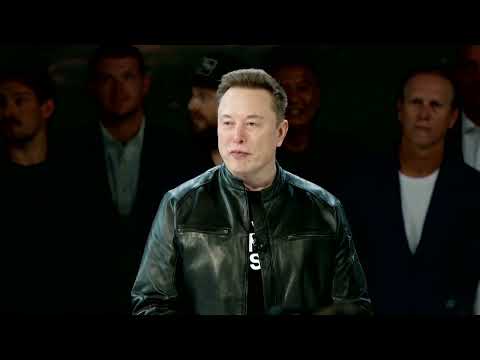
SpaceX’s June 2026 Nasdaq listing raised $75.0 billion, nearly three times the previous record, Saudi Aramco’s $25.6 billion in 2019. These are 16 initial public offerings ranked by gross proceeds at pricing, before any over-allotment option, as of 24 October 2026. This is a ranking of money raised, not investment advice.
Pictured: a still from Reuters’ video of Elon Musk and SpaceX ringing the Nasdaq opening bell on listing day; SpaceX is #1 with $75.0 billion raised at pricing.
Rank
Company
Gross proceeds at pricing (US$ billions)
With over-allotment (US$ billions)
Year
Exchange
Country
Sector
Offer price
1
SpaceX
75.0
85.7
2026
Nasdaq
United States
Aerospace
$135 per share
2
Saudi Aramco
25.6
29.4
2019
Saudi Exchange (Tadawul)
Saudi Arabia
Energy
SAR 32 per share
3
Alibaba Group
21.8
25.0
2014
NYSE
China
Technology
$68 per ADS
4
SoftBank Corp
21.3
23.5
2018
Tokyo Stock Exchange
Japan
Telecommunications
¥1,500 per share
5
Agricultural Bank of China
19.2
22.1
2010
Hong Kong + Shanghai
China
Banking
¥2.68 (A) / HK$3.20 (H)
6
ICBC
19.1
21.9
2006
Hong Kong + Shanghai
China
Banking
HK$3.07 (H)
7
NTT DoCoMo
18.1
—
1998
Tokyo Stock Exchange
Japan
Telecommunications
¥3.9 million per share
8
Visa
17.9
19.7
2008
NYSE
United States
Payments
$44 per share
9
AIA Group
17.8
20.5
2010
Hong Kong
Hong Kong
Insurance
HK$19.68 per share
10
Enel
16.5
—
1999
Milan + NYSE
Italy
Utilities
€4.3 per share
11
Facebook (Meta)
16.0
—
2012
Nasdaq
United States
Technology
$38 per share
12
General Motors (common stock)
15.8
18.1
2010
NYSE
United States
Automotive
$33 per share
13
Deutsche Telekom
13.0
—
1996
Frankfurt + NYSE
Germany
Telecommunications
DM 28.50 per share
14
Rivian
11.9
—
2021
Nasdaq
United States
Automotive
$78 per share
15
Dai-ichi Life
11.0
—
2010
Tokyo Stock Exchange
Japan
Insurance
¥140,000 per share
16
LG Energy Solution
10.7
—
2022
Korea Exchange
South Korea
Batteries
₩300,000 per share
No matching rows.
Read this first: IPOs are ranked by gross proceeds at pricing, in nominal US dollars at the exchange rate of the day, excluding the over-allotment (“greenshoe”) option; the next column shows the total once the option was exercised, where a source confirms it.[1][2] Gross proceeds include shares sold by existing owners, not just new money for the company, as with Alibaba and AIA. An IPO here means a company’s first public listing. That leaves out SK hynix, whose $26.5 billion Nasdaq ADR sale in July 2026 would rank second: Renaissance Capital counts it, but the company has been listed in Seoul for decades.[13] Alibaba’s $11.2 billion Hong Kong listing in 2019 is left out for the same reason. NTT’s 1987 privatization (around $15 billion in Dealroom’s list) is left out because the government sold it in several tranches over years. Counting choices: Agricultural Bank of China and ICBC each ran one offering across Hong Kong and Shanghai, counted once at the combined figure; General Motors shows its $15.8 billion common-stock sale only, with $4.35 billion of preferred shares sold alongside (the preferred shares are not counted; its $18.1 billion greenshoe figure is common stock only, and the full package reached $23.1 billion).[14] Figures are rounded to $0.1 billion. Older deals depend on exchange rates and sources differ by a few hundred million dollars (NTT DoCoMo is the widest), so treat differences under about 2% as rounding. Over-allotment figures are left blank for Facebook (the option was $2.4 billion at the IPO price, but no source confirmed its exercise), Rivian, Enel, NTT DoCoMo, Deutsche Telekom, Dai-ichi Life and LG Energy Solution. Deutsche Telekom’s $13.0 billion is Renaissance Capital’s figure (713 million shares at DM 28.50 is about DM 20.3 billion, consistent with it). Not ranked, pending: Anthropic said on 1 June 2026 that it had confidentially filed for a US IPO; as of mid-October 2026 no public prospectus had been filed and no price or size was set, so it has no rank here. This is a ranking of money raised, not investment advice or a view on any company’s shares.
The Top 10
#1
SpaceX — $75.0 billion
SpaceX priced 555,555,555 Class A shares at $135.00 on 11 June 2026 for $75.0 billion and began trading on Nasdaq under SPCX the next day, ringing the opening bell with Elon Musk speaking by video. Reuters and CNBC reported that after the underwriters exercised their over-allotment option the total rose to $85.7 billion. It is the largest IPO on record by this table’s rule, nearly three times the former record. Shares opened at $150 on the first day.[1][2][3] The video is Reuters’ coverage of the bell ringing.
#2
Saudi Aramco — $25.6 billion
The state oil giant sold 3 billion shares, 1.5% of the company, at SAR 32 on the Saudi Exchange (Tadawul), valuing it at about $1.7 trillion. It began trading on 11 December 2019 and rose by the 10% daily limit. On 12 January 2020 its banks exercised the greenshoe for 450 million more shares, lifting the total to $29.4 billion. It held the record until SpaceX.[1][4] The video is Bloomberg Television’s report on the listing.
#3
Alibaba Group — $21.8 billion
Alibaba sold 320 million American depositary shares at $68 on the New York Stock Exchange, starting trading on 19 September 2014. The company, Yahoo and two executives sold shares, so much of the money went to sellers: Alibaba’s own net proceeds were about $10.0 billion. Underwriters then bought 48 million more shares, taking the deal to $25 billion and, at the time, past Agricultural Bank of China’s record. It is also the largest IPO in US exchange history before SpaceX’s Nasdaq listing.[1][5] The video is the Financial Times’ report on the listing.
#4
SoftBank Corp — $21.3 billion
SoftBank Group floated its Japanese mobile business on the Tokyo Stock Exchange at ¥1,500 a share. Reuters reported that adding 160 million extra shares brought the total to ¥2.65 trillion, or $23.5 billion. The shares fell 15% on 19 December 2018, their first day, closing at ¥1,282.[1][6] No suitable video from an authoritative channel was found, so the icon is shown instead.
#5
Agricultural Bank of China — $19.2 billion
The state-owned lender sold shares in Shanghai (¥2.68) and Hong Kong (HK$3.20) in one offering in July 2010. The two over-allotment options were later exercised in full, lifting the total to $22.1 billion, a world record until Alibaba. Renaissance Capital lists its Hong Kong and Shanghai parts as separate lines; this table counts the single offering once.[1][7] No suitable video from an authoritative channel was found, so the icon is shown instead.
#6
ICBC — $19.1 billion
Industrial and Commercial Bank of China priced the first simultaneous Hong Kong and Shanghai listing in October 2006, with about $13.9 billion in H-shares and $5.1 billion in A-shares. With the greenshoe the offering reached $21.9 billion, then a record. Renaissance Capital lists only the Hong Kong part ($13.96 billion).[1][8] No suitable video from an authoritative channel was found, so the icon is shown instead.
#7
NTT DoCoMo — $18.1 billion
NTT’s mobile arm listed on the Tokyo Stock Exchange in October 1998 at ¥3.9 million a share, raising about ¥2.1 trillion, of which only part went to DoCoMo itself and the rest to its parent. Dollar figures vary with the exchange rate used: $18.1 billion is Reuters’ and Renaissance Capital’s, while Goldman Sachs, a lead bank, cites $18.4 billion. NTT bought out the public shareholders in a 2020 tender offer.[1][9] No suitable video from an authoritative channel was found, so the icon is shown instead.
#8
Visa — $17.9 billion
Visa sold 406 million shares at $44 on the New York Stock Exchange in March 2008. Underwriters took the full 10% option, so its SEC filing shows 446.6 million shares sold for $19.7 billion. About $13.4 billion of the proceeds redeemed shares held by its member banks. It was the largest US IPO until Alibaba.[1][10] No suitable video from an authoritative channel was found, so the icon is shown instead.
#9
AIA Group — $17.8 billion
AIG sold all the shares in AIA Group’s Hong Kong listing, at HK$19.68, in October 2010, using the money to repay its US government rescue. The greenshoe was exercised in full on 29 October 2010, raising gross proceeds to about $20.5 billion.[1][11] No suitable video from an authoritative channel was found, so the icon is shown instead.
#10
Enel — $16.5 billion
Italy sold about a third of the state power company in Milan and New York in November 1999, at €4.3 a share. Borsa Italiana lists the sale at €16.5 billion, and CNN reported $16.4 billion at the time. Sources describe it as Europe’s largest IPO then.[1][12] No suitable video from an authoritative channel was found, so the icon is shown instead.
Renaissance Capital, Largest Global IPOs: deal sizes at pricing for SpaceX, Aramco, Alibaba, SoftBank Corp, NTT, Visa, AIA, Enel, Facebook, General Motors, Deutsche Telekom, Rivian, Dai-ichi, LG Energy Solution. Cross-read against Dealroom’s Biggest IPOs of All Time (September 2026), which uses the same before-greenshoe rule and the combined Hong Kong and Shanghai figures for ICBC and Agricultural Bank of China.
Goldman Sachs, 1998: NTT DoCoMo ($18.4 billion; price per share), and RCR Wireless, NTT DoCoMo launches largest IPO in Japanese history (about ¥2.1 trillion, $17.95 billion). The $18.1 billion is Renaissance Capital’s and Reuters’; the 2020 tender offer is from Dealroom.
Visa Inc., Form 10-Q, 2008 (446.6 million shares at $44, $19.7 billion, $13.4 billion redemption); NBC News for the $17.9 billion base.
Yahoo Finance and Quartz coverage of SK hynix’s Nasdaq ADR listing (177.9 million ADRs at $149, about $26.5 billion, July 2026); Reuters via Investing.com for pricing. The listing is excluded from the ranking as described above.
CNN Money, GM IPO pricing, and Bloomberg, General Motors Gains in NYSE Return: 478 million common shares at $33; $4.35 billion in preferred; the greenshoe added $2.37 billion of common and $650 million of preferred. Facebook, Rivian, Dai-ichi Life and LG Energy Solution were checked against Renaissance Capital and Reuters, IFR, Rivian’s pricing release and Simpson Thacher’s announcement; Deutsche Telekom only against Renaissance Capital and the company’s issue price.
Videos: Reuters, Bloomberg Television and the Financial Times on YouTube; each ID was checked for channel and title. The other top-10 entries had no suitable authoritative video found.