Buildings & Structures
The Tallest Statues in Europe
Led by two Russian giants, the tallest completed statues across Europe — ranked by the height of the figure alone, not including any pedestal or base it stands on.
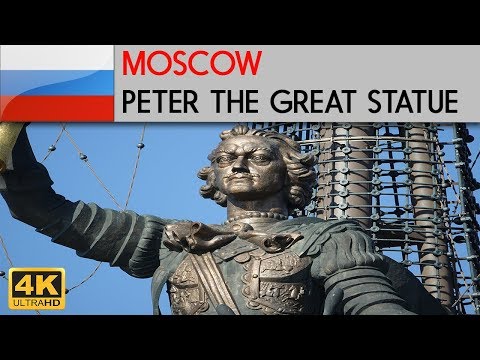
Pictured: the Peter the Great Statue in Moscow, #1 at 98 m.
The Top 10
#1
Peter the Great Statue — 98 m
Designed by sculptor Zurab Tsereteli and erected in Moscow in 1997 to mark the 300th anniversary of the Russian Navy, which Peter the Great founded. The bronze tsar stands atop a ship built from unfurled sails and rigging — legend has it the piece began life as an unsold Columbus statue before being reworked for its current subject.[1]
#2
The Motherland Calls — 85 m
The centerpiece of the Mamayev Kurgan memorial complex in Volgograd, commemorating the Battle of Stalingrad. Sculptor Yevgeny Vuchetich's allegorical figure of the Motherland, sword raised, was the largest free-standing statue in the world when it was unveiled in 1967 — the sword alone is 33 meters long.[2]
#3
Motherland Monument — 62 m
A stainless-steel figure of Mother Ukraine towering over Kyiv, unveiled in 1981 atop the Museum of the History of Ukraine in World War II. In 2023, on Ukraine's Independence Day, the Soviet-era hammer-and-sickle emblem on its shield was cut away and replaced with the Ukrainian trident.[3]
#4
Christ the King — 36 m
Completed in 2010 in the small Polish town of Świebodzin, this statue of Christ — including its gilded crown — is taller than Rio de Janeiro's famous Christ the Redeemer, though built on a much smaller budget funded largely by local parish donations. It stands on a 16.5-meter mound with a lift up to a small viewing platform.[4]
#5
Alyosha Monument — 35.5 m
Overlooking the Arctic port city of Murmansk, this 1974 monument honors the Soviet soldiers, sailors, and airmen who defended the region during World War II. It's Russia's second-tallest statue after The Motherland Calls, and its hollow granite-clad frame faces toward the "Valley of Glory" battle site roughly 19 kilometers away.[5]
#6
Notre-Dame du Sacré-Cœur (Miribel Madonna) — 32.6 m
France's tallest statue, built in molded concrete between 1938 and 1940 above the Mas Rillier hamlet near Lyon. A staircase of 151 steps climbs inside the figure to a small platform in its crown.[6]
#7
Cristo Rei — 28 m
Overlooking Lisbon from across the Tagus River in Almada, this statue was inspired directly by Rio de Janeiro's Christ the Redeemer and fulfilled a wartime vow by Portugal's bishops. It was inaugurated in 1959, standing atop an 82-meter arched pedestal.[6]
#8
Hermannsdenkmal (Arminius) — 26.57 m
A copper statue of the Cherusci leader Arminius, who defeated three Roman legions in AD 9, standing atop a domed colonnade in the Teutoburg Forest near Detmold. Completed in 1875 after nearly four decades of construction, it was for a time the tallest statue in the world.[6]
#9
San Carlone — 23.5 m
A copper colossus of San Carlo Borromeo overlooking Lake Maggiore near his birthplace of Arona, built between 1614 and 1698. For nearly two centuries after its completion, it was the tallest statue anywhere in the world, and visitors can still climb inside to look out through its eyes and ears.[6]
#10
Cristo del Otero — 21 m
Sculptor Victorio Macho's Art Deco Christ has stood on a hilltop outside Palencia, Spain since 1931, its raised hands displaying the stigmata. It's the tallest statue of Christ in Spain.[6]
Sources
- Reporting on the Peter the Great Statue's design history, dimensions, and 1997 unveiling in Moscow.
- National Geographic and Mamayev Kurgan memorial documentation on The Motherland Calls, its 1967 completion, and its dimensions.
- News coverage of the Motherland Monument's 1981 unveiling and its 2023 emblem replacement in Kyiv.
- Reporting on the Christ the King statue's 2010 completion, funding, and dimensions in Świebodzin, Poland.
- Visitor and heritage documentation of the Alyosha Monument in Murmansk, including its 1974 dedication and height.
- Statue height figures for the remaining entries (Miribel Madonna, Cristo Rei, Hermannsdenkmal, San Carlone, Cristo del Otero, Bavaria) cross-referenced across multiple heritage and tourism sources, using each figure's own height and excluding any separate pedestal, plinth, or mound.