#1
Vatican City — 0.44 km²
The smallest internationally recognized state in the world, entirely enclosed by the city of Rome. Its population — well under 1,000 — is mostly clergy.[1]
Every country smaller than 1,000 km² — 25 of them, ranked by area. Half of the ten smallest are European, the smallest of all is smaller than most golf courses, and two of the list's city-sized states, Singapore and Bahrain, are still growing out into the sea.
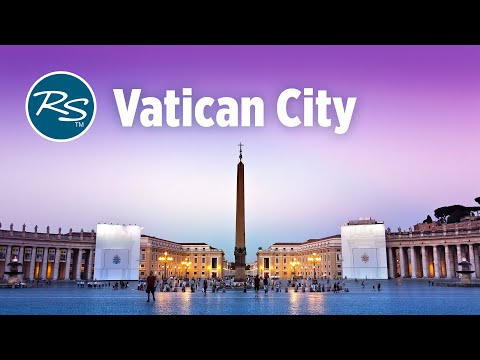
Pictured: Vatican City, #1 at just 0.44 km².
| Rank | Country | Area | Region |
|---|---|---|---|
| 1 | Vatican City | 0.44 km² | Europe |
| 2 | Monaco | 2.1 km² | Europe |
| 3 | Nauru | 21 km² | Oceania |
| 4 | Tuvalu | 26 km² | Oceania |
| 5 | San Marino | 61 km² | Europe |
| 6 | Liechtenstein | 160 km² | Europe |
| 7 | Marshall Islands | 181 km² | Oceania |
| 8 | Saint Kitts and Nevis | 263 km² | Caribbean |
| 9 | Maldives | 298 km² | Asia |
| 10 | Malta | 315 km² | Europe |
| 11 | Grenada | 344 km² | Caribbean |
| 12 | Saint Vincent and the Grenadines | 389 km² | Caribbean |
| 13 | Barbados | 430 km² | Caribbean |
| 14 | Antigua and Barbuda | 443 km² | Caribbean |
| 15 | Seychelles | 455 km² | Africa |
| 16 | Palau | 459 km² | Oceania |
| 17 | Andorra | 468 km² | Europe |
| 18 | Saint Lucia | 616 km² | Caribbean |
| 19 | Federated States of Micronesia | 702 km² | Oceania |
| 20 | Singapore | 744.3 km² | Asia |
| 21 | Tonga | 747 km² | Oceania |
| 22 | Dominica | 751 km² | Caribbean |
| 23 | Bahrain | 760 km² | Asia |
| 24 | Kiribati | 811 km² | Oceania |
| 25 | São Tomé and Príncipe | 964 km² | Africa |
No matching rows.
The smallest internationally recognized state in the world, entirely enclosed by the city of Rome. Its population — well under 1,000 — is mostly clergy.[1]
Only the second smallest, but one of the most densely populated places on Earth, packing roughly 38,000 people into just over two square kilometers — including the famous Monte Carlo casino district. It's been ruled by the House of Grimaldi since 1297, when Francesco Grimaldi seized the fortress disguised as a monk, making it the oldest ruling dynasty in Europe.[1]
The smallest island nation and the smallest republic in the world. Decades of phosphate mining briefly made it one of the richest countries per capita — and left much of the island's interior unusable.[1]
Made up of nine low-lying coral atolls and islands, with a maximum elevation of only a few meters — making it one of the countries most vulnerable to sea-level rise. Its name means "eight islands" in Tuvaluan even though the country actually spans nine, and it didn't join the United Nations until 2000, as the 189th member state.[1]
By tradition, founded in the year 301 — which would make it the world's oldest surviving republic. It's entirely surrounded by Italy.[1]
Doubly landlocked — bordered only by Switzerland and Austria, both themselves landlocked. Favorable tax laws mean it has more registered companies than citizens.[1]
A nation of more than 1,000 islands and islets scattered across a vast stretch of the Pacific despite its tiny total land area. Its Bikini Atoll was the site of major U.S. nuclear weapons testing in the mid-20th century.[1]
The smallest sovereign state in the Americas by both area and population — just two volcanic islands separated by a narrow channel known as The Narrows. Columbus named the larger island after his patron saint on his second voyage in 1493, and when English settlers arrived in 1623, it became the first English colony in the Caribbean.[1]
The lowest-lying country on Earth, with an average elevation of only about 1.5 meters above sea level, spread across roughly 1,200 coral islands. Organized tourism didn't begin until 1972, when its first island resort opened — the industry now accounts for roughly a third of the country's GDP.[1]
One of the most densely populated countries in the world for its size, with a capital, Valletta, that's an entire UNESCO World Heritage city. The Knights of St John ruled the islands from 1530 to 1798, granted the territory by Holy Roman Emperor Charles V in exchange for an annual tribute of a single live Maltese falcon.[1]