The ocean quahog holds the record at 507 years, ahead of the Greenland shark (about 392, with a range of 272 to 512) and the bowhead whale (211), as of November 2026. This ranks animals, one row per species, by the longest lifespan recorded for any individual. For trees see The Oldest Living Trees, and for people The Oldest People Ever.
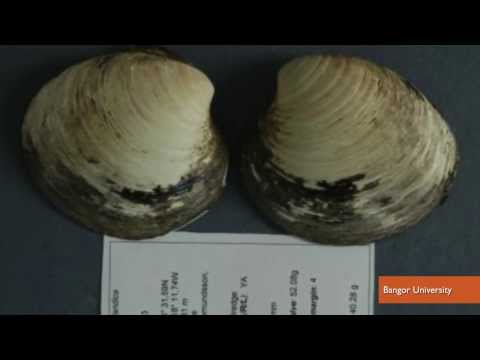
Pictured: Ming the ocean quahog, #1 at 507 years, in the thumbnail of a video about its discovery.
Rank
Animal
Max lifespan (years)
Scientific name
Group
Habitat
How age was determined
Confidence
Record type
1
Ocean quahog
507
Arctica islandica
Mollusc
Marine
Shell growth rings (cross-dated)
High
Wild
2
Greenland shark
392
Somniosus microcephalus
Fish
Marine
Radiocarbon dating of eye lens
Low
Wild
3
Bowhead whale
211
Balaena mysticetus
Mammal
Marine
Eye-lens amino-acid dating
Medium
Wild
4
Rougheye rockfish
205
Sebastes aleutianus
Fish
Marine
Ear-bone (otolith) growth rings
Medium
Wild
5
Red sea urchin
200
Mesocentrotus franciscanus
Echinoderm
Marine
Radiocarbon-calibrated growth
Medium
Wild
6
Galápagos tortoise
177
Chelonoidis niger
Reptile
Land
Captive record
Low
Captive
7
Pacific geoduck
168
Panopea generosa
Mollusc
Marine
Shell growth rings
Medium
Wild
8
Shortraker rockfish
157
Sebastes borealis
Fish
Marine
Ear-bone (otolith) growth rings
Medium
Wild
9
Aldabra giant tortoise
152
Aldabrachelys gigantea
Reptile
Land
Captive record
Low
Captive
9
Lake sturgeon
152
Acipenser fulvescens
Fish
Freshwater
Fin-ray growth rings
Medium
Wild
11
Orange roughy
149
Hoplostethus atlanticus
Fish
Marine
Ear-bone (otolith) growth rings
Medium
Wild
12
Eastern box turtle
138
Terrapene carolina
Reptile
Land
Shell growth rings and field records
Medium
Wild
No matching rows.
Maximum recorded lifespan in years, as of November 2026. The figures are the “maximum longevity” values in the AnAge database of animal ageing and longevity, checked against the original studies for the quahog, Greenland shark, bowhead whale, rougheye rockfish and red sea urchin.[1] Record type says whether the oldest individual was aged in the wild or lived in captivity. The Confidence column is RList’s own judgement of how firmly the maximum is established (AnAge itself rates every entry here “acceptable”): high for cross-dated growth lines, low where the birth date is unknown or the method has a wide error. Rules: each species appears once, with its single oldest individual; only solitary, individual animals count. Colonial and sessile organisms are excluded, such as black corals and the glass sponge Monorhaphis chuni, claimed at about 11,000 years, because a colony is not one animal in the usual sense. The “immortal jellyfish” Turritopsis dohrnii is excluded too: it can revert to a juvenile form, but no individual has a documented age. Other widely repeated figures are left out for lack of evidence: the koi “Hanako” at 226 years, and the Aldabra tortoise Adwaita at about 255. Species tied on a value share a rank. The list stops at 12; the tuatara (90 years) and fin whale (114) follow.
The Top 10
#1
Ocean quahog — 507 years
“Ming”, an ocean quahog dredged off Iceland in 2006, was aged at 507 years by counting and cross-dating the yearly growth lines in its shell, which puts its birth around 1499.[1][2] It is the longest-lived individual animal on record, and the only reason its age is known is that it died in the process of being studied. The video tells that story.
#2
Greenland shark — 392 years
Radiocarbon dating of the eye lens put the largest of 28 sharks at about 392 years, with a statistical range of 272 to 512 years.[3] That wide range is why this row is rated low confidence: the shark has no annual rings, and some scientists doubt the upper end. Even the low end would make it the longest-lived vertebrate. The video is Jonathan Bird’s Blue World footage of the species.
#3
Bowhead whale — 211 years
The bowhead is the longest-lived mammal. AnAge’s 211 years comes from dating amino acids in the eye lens of a harvested whale, an estimate with an error of about 35 years.[1][4] Old harpoon tips found in living whales support lifespans past a century. The video is NOAA’s Arctic Report Card on the species, not on its age.
#4
Rougheye rockfish — 205 years
A rougheye rockfish from southern Alaska was aged at 205 years from the growth rings in its ear bones, the longest recorded for any rockfish.[1][5] Ear-bone ages in very old fish can be off by years, so this is rated medium. No verified official video was available, so an icon is shown.
#5
Red sea urchin — 200 years
Radiocarbon from nuclear-test fallout was used to check that the largest red sea urchins off British Columbia, over 19 cm across, are around 200 years old.[6] Earlier guesses were 7 to 15 years. Researchers found little sign of ageing in them. No verified official video was available, so an icon is shown.
#6
Galápagos tortoise — 177 years
AnAge lists 177 years for the Galápagos tortoise, a captive record.[1] The best-known case, Harriet at Australia Zoo, was said to be about 175 when she died in 2006, but her hatching date was never documented and the link to Darwin is the zoo’s claim.[7] That is why this row is rated low. The video is from the Charles Darwin Foundation’s tortoise research.
#7
Pacific geoduck — 168 years
The geoduck, the world’s largest burrowing clam, is listed at 168 years from shell growth rings.[1] It is the second clam in the top ten, after the quahog. No verified official video was available, so an icon is shown.
#8
Shortraker rockfish — 157 years
The shortraker rockfish reaches 157 years in AnAge.[1] A 2013 Alaska record fish first reported as 200 years old was later aged at 64, a reminder to be careful with headline claims. No verified official video was available, so an icon is shown.
#9
Aldabra giant tortoise — 152 years
AnAge records 152 years for a captive Aldabra tortoise.[1] Adwaita, a tortoise who died in Kolkata in 2006, was reported to be about 255, but with no documented birth date that figure is disputed and not used here. The video is the Wildlife Conservation Society’s clip of the species at the Bronx Zoo.
#10
Lake sturgeon — 152 years
The lake sturgeon is the longest-lived freshwater fish in the table, at 152 years, tied with the Aldabra tortoise and aged from growth rings in a fin ray.[1] The IUCN rates it Endangered. No verified official video was available, so an icon is shown.
AnAge: The Animal Ageing and Longevity Database, Human Ageing Genomic Resources (maximum longevity entries for each species, accessed November 2026) — genomics.senescence.info.
Ming (clam): 507-year age from shell growth increments (Butler et al., 2013), Guinness World Records “Oldest non-colonial animal ever” — guinnessworldrecords.com.
Nielsen et al., “Eye lens radiocarbon reveals centuries of longevity in the Greenland shark”, Science, 2016 — science.org.
George et al., “Age and growth estimates of bowhead whales via aspartic acid racemization”, Canadian Journal of Zoology, 1999 (the 211-year specimen, via AnAge).
COSEWIC assessment of rougheye rockfish (maximum recorded age 205 years, southern Alaska) — canada.ca.
Ebert and Southon, “Red sea urchins can live over 100 years”, Fishery Bulletin, 2003; Oregon State University summary — sciencedaily.com.
Wikipedia, “Harriet (tortoise)” (age and provenance disputes) — en.wikipedia.org.
YouTube: b/60 (Ming the quahog), Jonathan Bird’s Blue World (Greenland sharks), NOAA PMEL (bowhead whales), Charles Darwin Foundation (Galápagos tortoises), Wildlife Conservation Society (Aldabra tortoises).