Vehicles & Machines
The Longest Car Models in the World
Limousines, land yachts, and everything stretched past 5.5 meters — the longest production car models ever built.
#1
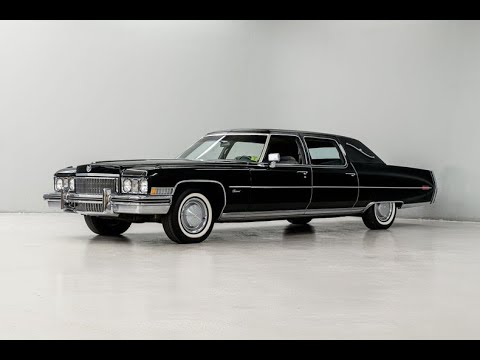
Cadillac Fleetwood Seventy-Five — 6.41 m
The longest series-production American car ever sold to the public. Built on GM's stretched institutional-market wheelbase, it was a favorite of livery services and funeral homes for nearly two decades.[1]
#2
ZIL-4104 — 6.32 m
The Soviet Union's state limousine, built in tiny numbers for the Politburo. It was officially a production model, though in practice each car was close to hand-built, some with armor plating.[1]
#3
Mercedes-Benz 600 Pullman — 6.24 m
The car of choice for heads of state and celebrities alike through the 1960s and 70s, built to order with hydropneumatic self-leveling suspension and, on the longest versions, six or eight doors. Its clientele included Elvis Presley, John Lennon, Elizabeth Taylor, and Coco Chanel, and a Landaulet variant even served as the Popemobile for Pope John XXIII.[1]
#4
Maybach 62 — 6.17 m
The name is literal: "62" is the car's length in decimeters. It was Mercedes' attempt to out-luxury Rolls-Royce and Bentley with a standalone ultra-luxury marque.[1]
#5
Rolls-Royce Phantom VIII Extended Wheelbase — 5.98 m
The current flagship, stretched specifically to add rear legroom for chauffeured passengers, with rear-hinged "coach" doors that close themselves at the touch of a button. An optional Starlight Headliner hand-places up to 1,600 fiber-optic lights into perforated leather on the ceiling to mimic a night sky, one of the car's signature bespoke touches.[1]
#6
Hongqi Guoli — 5.98 m
The modern successor to China's historic state-limousine line, built by FAW's Hongqi ("Red Flag") marque primarily for government and ceremonial use, with a price tag rivaling a Rolls-Royce Phantom. Its name translates to "national gift," fitting for the oldest brand in Chinese automaking, which has served as the country's official state car since Hongqi's 2009 revival, with more than 500 delivered to government bodies.[1]
#7
Lincoln Town Car Executive L — 5.87 m
A stretched, livery-market version of Ford's last full-size, body-on-frame American luxury sedan, built mainly for airport and funeral-home fleets before the Town Car nameplate was discontinued in 2011. Built on Ford's aging Panther platform, shared with the Crown Victoria and Grand Marquis, it was prized for reliability that let taxi and livery operators regularly run examples past 400,000 miles.[1]
#8
Bentley Mulsanne Extended Wheelbase — 5.83 m
Bentley's flagship saloon, stretched by roughly 25 centimeters over the standard Mulsanne, was built in extremely limited numbers for chauffeured owners who valued rear-seat legroom over driving involvement. When Mulsanne production ended in 2020 after roughly 7,300 cars, it also retired Bentley's 6.75-liter V8, in continuous production since 1959 and one of the longest-serving engines in automotive history.[1]
#9
Chrysler Imperial LeBaron — 5.79 m
One of the last of Detroit's full-size "land yacht" luxury sedans before the 1970s fuel crisis forced automakers to downsize, marketed as the flagship of Chrysler's prestige Imperial line. It arrived just before the 1973 OPEC oil embargo reshaped the American luxury market, and within two years Chrysler had shrunk the redesigned Imperial and folded the once-flagship nameplate into the New Yorker line.[1]
#10
Checker Aerobus — 5.77 m
Built on a stretched, multi-door version of Checker's famous taxicab platform, the Aerobus was used mainly as an airport shuttle and funeral limousine rather than a conventional street taxi. Assembled at Checker's small Kalamazoo, Michigan factory, the company also built a limited-production ambulance version of the Aerobus before ceasing vehicle production entirely in 1982.[1]