Pop Culture & Entertainment
The Highest-Rated K-Dramas in Korean TV History
Korean TV dramas ranked by their most-watched episode. MBC’s You and I leads with a 66.9% household rating for its April 1998 finale, and every drama in the top 16 aired on KBS, MBC or SBS between 1991 and 2004.
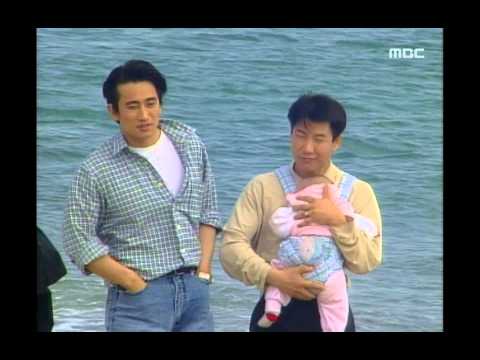
Pictured: a scene from the final episode of MBC’s You and I, #1 with a 66.9% household rating on April 26, 1998.
How this list works. Each drama is ranked by its peak household rating: the share of TV-owning homes in the ratings panel that were tuned to its most-watched episode. A rating of 66.9% means about two in every three of those homes had the drama on. It counts homes, not people, and it covers one night only, so a drama can have a lower peak but a higher average over its run. What Is Love (#3) holds the record for the highest average.[7] The figures come from the ratings firms of the time. Media Service Korea (MSK) measured ratings until AC Nielsen bought it in August 1999; it became AC Nielsen Korea, then AGB Nielsen in 2005 and Nielsen Korea in 2013. MSK’s panel covered only the Seoul Capital Area until AC Nielsen widened it to the whole country, so figures from before then may reflect the Seoul area rather than the whole country, even where they are labelled nationwide. Lovers in Paris (#13) uses the figure from a rival firm, TNS Media Korea.[2][20] Every drama here aired between 1991 and 2004 on a terrestrial network: KBS, MBC or SBS. Those channels had the national audience largely to themselves in the 1990s. Since then viewers have spread out across cable channels and, later, streaming, so even the biggest new hits get far smaller shares. The record for a cable drama is 28.371%, set by JTBC’s The World of the Married on May 16, 2020, only just over half the lowest figure on this list.[2][17] The list stops at 16 because the next place is a tie at 53.1% between Gook Hee and Trap of Youth, which DabPop could not confirm in other sources.[1][2] Episode counts and genres are RList’s additions, with episode counts taken from each drama’s own Wikipedia article;[19][21][22][23] “Period” means a historical drama set in Korea’s royal past, known in Korean as a sageuk. For the biggest Korean hits in cinemas, see The Most-Watched Korean Films of All Time. Where the data comes from: the rows are from DabPop’s ranking of the highest-rated K-dramas on Korean TV (data as of October 11, 2026), which follows the Nielsen-based top-50 list in Wikipedia’s “Korean drama” article.[1][2] RList checked the top five against each drama’s own English and Korean Wikipedia articles and Korean press reports on October 12, 2026. They agree, with two caveats. Many Korean sources, including several Korean Wikipedia articles, treat First Love’s 65.8% as the all-time record; You and I’s 66.9% comes from the per-episode ratings MBC published on its own website. This page keeps DabPop’s order.[3][4][6][7] Several peaks also differ by up to a point between sources, notably Hur Jun, Sandglass and Dae Jang Geum (see their entries below). One change from DabPop: Blowing of the Wind (#15) is listed here on KBS1, not KBS2. It was KBS1’s weekday evening serial, and the press at the time credited it with lifting KBS-1’s ratings.[16]
The Top 10
#1
You and I — 66.9%
MBC’s weekend drama ran for 58 episodes, from October 11, 1997 to April 26, 1998. Written by Kim Jung-soo and directed by Choi Jong-soo, it was set and largely filmed in Ganggu, a harbour town in Yeongdeok County, North Gyeongsang. Choi Bool-am and Kim Hye-ja played the parents, with Park Sang-won, Choi Jin-sil, Cha In-pyo and Song Seung-heon among the younger cast.[3][4] The finale jumped to 66.9%, up from 48.7% the night before, and the series averaged 43.7% across its run, according to MBC’s own episode figures.[3][4]
#2
First Love — 65.8%
KBS2’s 66-episode weekend drama aired from September 7, 1996 to April 20, 1997, with Choi Soo-jong, Lee Seung-yeon and Bae Yong-joon in the leads.[5] It opened at 35.1%, passed 40% within a month and topped the weekly ratings for eight months. KBS News reported its 65.8% finale as the highest rating since ratings surveys began, a year before You and I’s finale, and many Korean sources still treat it as the record.[6] It averaged 52.6% over its run. After Bae became a star in Japan with Winter Sonata, the Japanese broadcaster NHK aired First Love there in 2005.[5]
#3
What Is Love — 64.9%
Kim Soo-hyun wrote this 55-episode MBC family drama, which aired on weekends from November 23, 1991 to May 31, 1992. Choi Min-soo, Ha Hee-ra, Kim Hye-ja and Lee Soon-jae starred.[7] Its peak came on May 24, 1992, a week before the finale. Its average of 59.6% across the whole run is often cited as the highest of any Korean drama.[7] MBC’s own survey at the time put its best night above 75%, but that figure is unofficial.[7]
#4
Sandglass — 64.5%
SBS aired all 24 episodes between January 9 and February 16, 1995. Song Ji-na wrote it and Kim Jong-hak directed it, and it follows three friends caught up in the political repression of 1970s and 1980s Korea, including a re-creation of the 1980 Gwangju Uprising.[8] It made stars of Choi Min-soo, Go Hyun-jung and Park Sang-won, and Lee Jung-jae, later the lead of Squid Game, was also in the cast. A Russian song, Joseph Kobzon’s “Zhuravli” (“Cranes”), became widely known in Korea through the show.[8] Its own Wikipedia article has an unsourced episode table in which 64.5% is the Seoul figure for the last episode and 64.7% the highest nationwide one; this page keeps 64.5%, the figure in the compiled list.[2][8]
#5
Hur Jun — 63.5%
MBC’s 64-episode period drama tells the life of Heo Jun, a doctor of the Joseon era, with Jun Kwang-ryul in the title role. It began on November 22, 1999 and ended on June 27, 2000.[9] Its director, Lee Byung-hoon, later made Dae Jang Geum (#10).[9] It is the highest-rated period drama in Korean TV history, though sources differ on the exact peak: 63.5% in the compiled list and the Korean Wikipedia, 63.7% in a WikiTree ranking, and 64% in its English Wikipedia article.[2][9][10][11] In 2012 it was reported to have drawn more than 90% of viewers in Iraq’s Kurdistan region.[9]
#6
A Sunny Place of the Young — 62.7%
KBS2 aired this 56-episode weekend drama from May 6 to November 12, 1995. Set in Seoul and in the coal-mining town of Sabuk in Gangwon Province in the late 1980s, it is a story of young people chasing success, with plenty of ambition and betrayal along the way.[12] The cast included Ha Hee-ra (also in What Is Love, #3), Lee Jong-won, Heo Joon-ho, Jeon Do-yeon and Bae Yong-joon, who starred in First Love (#2) the following year.[7][12][5]
#7
Sons and Daughters — 61.1%
MBC’s 64-episode weekend drama ran from October 3, 1992 to May 9, 1993. Set from the late 1960s through the 1970s, it follows twins born into a family that prizes sons: Hu-nam, the daughter, played by Kim Hee-ae, is pushed aside, while her brother Gwi-nam, played by Choi Soo-jong, gets every chance.[13] Park Jin-sook wrote it and Jang Soo-bong directed it, and Chae Shi-ra, Oh Yeon-soo and Han Suk-kyu were also in the cast.[13]
#8
Taejo Wang Geon — 60.2%
At 200 episodes, KBS1’s period drama is by far the longest in the Top 10. It ran from April 1, 2000 to February 24, 2002, with Choi Soo-jong as Wang Geon, the founder of the Goryeo dynasty. Lee Hwan-kyung wrote it and Kim Jong-sun directed it.[14] Its biggest moment came in episode 120, the death of the warlord Gungye, which drew 60.4% in the Seoul area.[14] Choi Soo-jong is in five of the 16 dramas on this list: First Love, Sons and Daughters, Taejo Wang Geon, Jealousy and Blowing of the Wind.[5][13][14][16][21]
#9
Eyes of Dawn — 58.4%
Based on Kim Seong-jong’s 10-volume novel, this MBC epic follows its characters from Japanese colonial rule through World War II, liberation and the Korean War. It ran for 36 episodes from October 7, 1991 to February 6, 1992, with Chae Shi-ra, Park Sang-won and Choi Jae-sung in the leads.[15] It cost ₩7.2 billion, used more than 270 actors and 21,000 extras, shot in China and the Philippines, and was finished before it went on air, which was rare at the time. In 1992 MBC sold it to Turkey’s TRT, making it the first Korean drama sold to a European broadcaster.[15] Writer Song Ji-na and director Kim Jong-hak went on to make Sandglass (#4) in 1995.[8][15]
#10
Dae Jang Geum — 57.8%
Lee Young-ae plays Jang-geum, an orphaned palace cook who becomes the first woman to serve as the king’s physician, in this 54-episode MBC period drama. It ran from September 15, 2003 to March 23, 2004, and is the newest drama in the Top 10.[18] It cost about US$15 million to make, was later sold to 91 countries and has earned about US$103.4 million worldwide, making it one of the shows that spread the Korean Wave.[18] Its peak is 57.8% in the compiled list but 57.1% in its own Wikipedia article.[2][18]
Sources
- DabPop, “The Highest-Rated K-Dramas on Korean TV” (data as of October 11, 2026) — https://dabpop.co/posts/highest-rated-k-dramas-korean-tv. Source of every row’s rank, peak rating, network (except #15), years aired and ratings firm.
- Wikipedia, “Korean drama”, sections “Ratings and viewership”, “List of highest-rated series on terrestrial television” (top 50 by nationwide household rating, Nielsen) and “List of highest-rated series on cable television”, checked October 12, 2026 — https://en.wikipedia.org/wiki/Korean_drama#Ratings_and_viewership
- Wikipedia, “You and I (TV series)”, including its episode ratings table — https://en.wikipedia.org/wiki/You_and_I_(TV_series)
- Korean Wikipedia, “그대 그리고 나” (You and I), MSK ratings table sourced to MBC’s per-episode ratings page, and filming location (in Korean) — https://ko.wikipedia.org/wiki/그대_그리고_나
- Wikipedia, “First Love (1996 TV series)” — https://en.wikipedia.org/wiki/First_Love_(1996_TV_series)
- Korean Wikipedia, “첫사랑 (1996년 드라마)” (First Love), ratings history citing Yonhap (1996) and KBS News (1997) (in Korean) — https://ko.wikipedia.org/wiki/첫사랑_(1996년_드라마)
- Korean Wikipedia, “사랑이 뭐길래” (What Is Love), credits and ratings section (in Korean) — https://ko.wikipedia.org/wiki/사랑이_뭐길래
- Wikipedia, “Sandglass (TV series)”, including its episode ratings table — https://en.wikipedia.org/wiki/Sandglass_(TV_series)
- Wikipedia, “Hur Jun (TV series)” — https://en.wikipedia.org/wiki/Hur_Jun_(TV_series)
- Korean Wikipedia, “허준 (드라마)” (Hur Jun) (in Korean) — https://ko.wikipedia.org/wiki/허준_(드라마)
- WikiTree, “‘역대 한국 사극 드라마 시청률 순위’ 3위 대장금, 2위 태조 왕건, 대망의 1위는…” (all-time ratings ranking of Korean period dramas; in Korean) — https://www.wikitree.co.kr/articles/1005091
- Korean Wikipedia, “젊은이의 양지 (드라마)” (A Sunny Place of the Young) (in Korean) — https://ko.wikipedia.org/wiki/젊은이의_양지_(드라마)
- Korean Wikipedia, “아들과 딸” (Sons and Daughters) (in Korean) — https://ko.wikipedia.org/wiki/아들과_딸
- Wikipedia, “Taejo Wang Geon (TV series)” — https://en.wikipedia.org/wiki/Taejo_Wang_Geon_(TV_series)
- Wikipedia, “Eyes of Dawn” — https://en.wikipedia.org/wiki/Eyes_of_Dawn
- Korean Wikipedia, “바람은 불어도” (Blowing of the Wind), network, schedule, episode count and ratings, citing the Kyunghyang Shinmun and Dong-A Ilbo (1996) (in Korean) — https://ko.wikipedia.org/wiki/바람은_불어도
- Wikipedia, “The World of the Married” (cable ratings record) — https://en.wikipedia.org/wiki/The_World_of_the_Married
- Wikipedia, “Jewel in the Palace” — https://en.wikipedia.org/wiki/Jewel_in_the_Palace
- Korean Wikipedia, “보고 또 보고” (See and See Again), episode count (in Korean) — https://ko.wikipedia.org/wiki/보고_또_보고
- Wikipedia, “Lovers in Paris” (episode ratings sourced to TNS Media Korea) — https://en.wikipedia.org/wiki/Lovers_in_Paris
- Wikipedia, “Jealousy (1992 TV series)” — https://en.wikipedia.org/wiki/Jealousy_(1992_TV_series)
- Korean Wikipedia, “진실 (2000년 드라마)” (Truth), episode count (in Korean) — https://ko.wikipedia.org/wiki/진실_(2000년_드라마)
- Korean Wikipedia, “목욕탕집 남자들” (Men of the Bath House), episode count (in Korean) — https://ko.wikipedia.org/wiki/목욕탕집_남자들