Sports & Fitness
The Most MLB MVP Awards of All Time
Every player who has won Major League Baseball’s Most Valuable Player award, as voted by the BBWAA, twice or more, ranked by awards, as of November 14, 2026 (including the 2026 awards, announced November 12). Barry Bonds holds the record with 7.
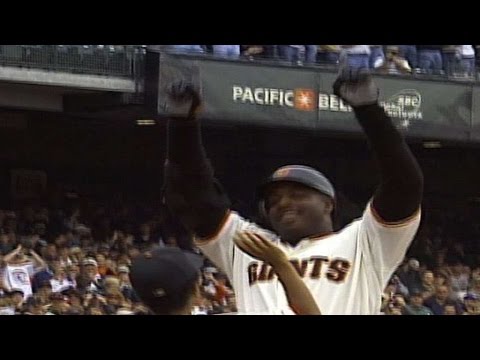
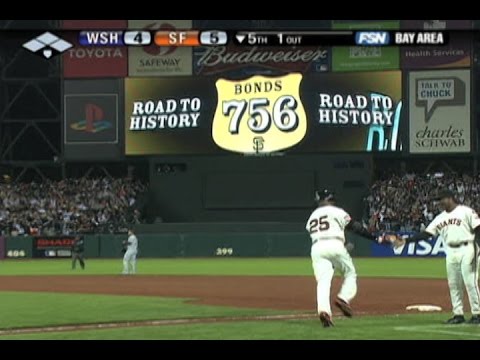
Pictured: Barry Bonds hitting his 73rd home run of 2001, from MLB’s clip of it; he is #1 with 7 MVP awards.
As of November 14, 2026, including the 2026 awards, announced on November 12: Yordan Alvarez of the Houston Astros (American League) and Pete Crow-Armstrong of the Chicago Cubs (National League), each a first-time winner by a unanimous vote, so each has one award and neither is in the table.[1][2][3][4] This counts only the MVP award voted by the Baseball Writers’ Association of America (BBWAA), which began in 1931.[5][6][8] The Chalmers Award (1911–14), the League Award (1922–29) and the unofficial 1929–30 winners are not counted, so Lou Gehrig and Mickey Cochrane, whom some lists show with two, have one BBWAA award each, and Rogers Hornsby and Walter Johnson have none.[6] Players tied on awards share a rank and are listed in order of their first win, and the next rank skips the places taken by the tie: Barry Bonds is #1, Shohei Ohtani #2, eleven players share #3 with three awards, and the 17 players with two share #14. Only 13 players have won three or more, so the table runs down to the full group of two-time winners, 30 players in all; every player who won once is left out. Ohtani and Frank Robinson are the two players who won in both leagues. Marked active are players on a major league roster in 2026, which can change when a player retires, and a player not yet in the Hall of Fame may simply not be eligible yet. This is the award by player, not a count of home runs (see the career home run leaders) or of team titles (see the World Series titles), and it is MLB’s one MVP, voted in each league, unlike the NBA’s single award (see the NBA MVP awards). Hall of Fame status is from Baseball-Reference.[14] The table only changes when an award is announced, in November.
The Top 10
#1
Barry Bonds — 7 MVPs
Bonds won seven awards, more than anyone else: in 1990 and 1992 with the Pittsburgh Pirates and in 1993 and 2001–2004 with the San Francisco Giants, all in the National League.[6] His 1990 win drew 23 of 24 first-place votes and his 1992 win 18, and his 2001 win, the year he hit a record 73 home runs with a .515 on-base average and .863 slugging average, took 30 of the 32 first-place votes.[7][13] His 2002 win was a clean sweep, all 32 first-place votes, in a season when he walked 198 times, 68 of them intentionally, and hit .370 to win the batting title.[7][13] The four in a row from 2001 to 2004 are a record that no other player in either league has matched, and at 40 in 2004 he became the oldest MVP, when he drew 120 intentional walks and posted a .609 on-base average.[13][7] He is also MLB’s career home run leader with 762, a different record from this one (see the home run leaders), and he is not in the Hall of Fame.[13][14] The video is MLB’s clip of his 73rd home run of 2001, from his 2001 MVP season.[16]
#2
Shohei Ohtani — 4 MVPs
Ohtani won the American League award in 2021 and 2023 with the Los Angeles Angels and the National League award in 2024 and 2025 with the Los Angeles Dodgers, and all four votes were unanimous, with all 30 first-place votes each time.[7][9][12] He is the only player to win twice in each league and the only player to win unanimously more than once, and Frank Robinson was the first to win in both leagues.[9][11] In 2023 he hit .304 with 44 home runs while also going 10–5 with a 3.14 ERA as a pitcher, and in 2024 he reached 54 home runs and 59 stolen bases, the 50-50 season, in his first year with the Dodgers on a 10-year, $700 million contract.[13][7] In 2025 he hit 55 home runs, a Dodgers franchise record, and the Dodgers won back-to-back World Series in 2024 and 2025.[13] He was the first designated hitter to win the award, and Yordan Alvarez became only the second in 2026.[11][1] Ohtani finished second to Pete Crow-Armstrong in the 2026 National League vote, with 26 second-place votes and 264 points, so his total stays at 4 as of November 14, 2026.[2] The video is MLB’s compilation of the highlights from all four of his MVP seasons.
#3 (tie)
Jimmie Foxx — 3 MVPs
Foxx won in 1932 and 1933 with the Philadelphia Athletics and in 1938 with the Boston Red Sox, all in the American League.[6] In 1932 he hit 58 home runs (the official total; one account has him with 60, two of which came in rained-out games that did not count) and drove in 169 runs, and in 1933 he won the Triple Crown, leading the league in home runs, RBI and batting average.[13][7] His 1938 award came with 19 first-place votes and 305 points to Bill Dickey’s 196, in a season when he had 50 home runs and 175 RBI.[7] He finished with 534 career home runs and went into the Hall of Fame in 1951, on 179 of 226 ballots.[13][14] The video is the Baseball Hall of Fame’s short biography of him.
#3 (tie)
Joe DiMaggio — 3 MVPs
DiMaggio won in 1939, 1941 and 1947, all with the New York Yankees.[6] The 1941 award came in the year of his record 56-game hitting streak, which began on May 15 and ended in July, and he won it by 291 points to Ted Williams’s 254.[15][7] The 1947 vote was decided by a single point: DiMaggio got 202 points and 8 first-place votes to Williams’s 201 points and 3, even though Williams, who won the Triple Crown that year, led the league in home runs and RBI, and DiMaggio hit .315 with 20 home runs and 97 RBI.[7] He won nine World Series with the Yankees and entered the Hall of Fame in 1955 on 223 of 251 ballots.[13][14] The video is MLB Network’s feature on what it would take to break his hitting-streak record.
#3 (tie)
Stan Musial — 3 MVPs
Musial won in 1943, 1946 and 1948, all with the St. Louis Cardinals, the only team he played for.[6][13] His 1946 award was the most one-sided of the three, with 22 first-place votes and 319 points to Dixie Walker’s 159.[7] In 1948 he hit .376 with 230 hits, 39 home runs and 131 RBI, and a home run lost in a rain-shortened game cost him the Triple Crown.[7][13] He retired with 3,630 hits and seven National League batting titles, and was elected to the Hall of Fame in 1969 on his first ballot, with 93.2% of the vote.[13][14] The video is MLB’s clip of his 3,000th hit in 1958.
#3 (tie)
Yogi Berra — 3 MVPs
Berra, a catcher, won in 1951, 1954 and 1955 with the New York Yankees.[6] All three votes were close: in 1951 he got 184 points and 6 first-place votes to Ned Garver’s 157 and 6, in 1954 he edged Larry Doby 230 to 210, and in 1955 he beat Al Kaline 218 to 201.[7] In 1954 he drove in 125 runs, and in 1955 he hit 27 home runs with 108 RBI.[7] He won 10 World Series as a player, was an 18-time All-Star, and caught Don Larsen’s perfect game in the 1956 World Series before entering the Hall of Fame in 1972.[13][14] The video is MLB’s eight-minute tribute to him.
#3 (tie)
Roy Campanella — 3 MVPs
Campanella, who won in 1951, 1953 and 1955 with the Brooklyn Dodgers, won in the same years as Berra for two of his three awards, one in each league.[6] His 1951 win took 243 points and 11 first-place votes, and in 1953 he hit .312 with 41 home runs and 142 RBI, which broke the Dodgers’ franchise record of 130 RBI, and took 17 first-place votes.[7][13] His 1955 win was by five points over his own teammate Duke Snider, 226 to 221, with the two tied at 8 first-place votes, in the season the Dodgers won their first World Series.[7][13] He began in the Negro leagues at 15, in 1937, and his career ended when a car crash on January 28, 1958 left him paralyzed from the shoulders down; he was inducted into the Hall of Fame in 1969.[13][14] The video is MLB’s clip of the Game 7 win that clinched the 1955 title.
#3 (tie)
Mickey Mantle — 3 MVPs
Mantle won in 1956, 1957 and 1962, all with the New York Yankees.[6] His 1956 award was unanimous, 24 of 24 first-place votes and 336 points, in the year he won the Triple Crown with a .353 average, 52 home runs and 130 RBI.[7][13] In 1957 he hit .365 and drew 146 walks, a .512 on-base average, and beat Ted Williams 233 points to 209; in 1962 he won with 13 first-place votes and 234 points, playing just 123 games.[7] He won seven World Series, hit 536 career home runs and was elected to the Hall of Fame on his first ballot in 1974.[13][14] The video is MLB’s clip of his running catch in Game 5 of the 1956 World Series that kept Larsen’s perfect game alive, from his Triple Crown season.
#3 (tie)
Mike Schmidt — 3 MVPs
Schmidt won in 1980, 1981 and 1986, all with the Philadelphia Phillies.[6] The 1980 vote was unanimous, 24 of 24 first-place votes and 336 points, and he hit 48 home runs that year, then won the World Series MVP as the Phillies beat the Kansas City Royals in six games.[7][13] In 1981, a season shortened by a strike, he won with 31 home runs in 102 games and 21 first-place votes, and in 1986 he won with 37 home runs and 119 RBI, 287 points to Glenn Davis’s 231.[7] He hit 548 career home runs, led the National League in home runs eight times and won 10 Gold Gloves at third base, and he was elected to the Hall of Fame in 1995 on 444 of 460 ballots.[13][14] The video is MLB’s clip of Harry Kalas’s call of his 500th home run.
#3 (tie)
Alex Rodriguez — 3 MVPs
Rodriguez won in 2003 with the Texas Rangers and in 2005 and 2007 with the New York Yankees, all in the American League.[6] The 2003 award is the unusual one: the Rangers finished last in the American League West, and only he and Andre Dawson (1987) have won on a last-place team.[13] He won it that year with 47 home runs and 118 RBI, 242 points to Carlos Delgado’s 213, and in 2005 he beat David Ortiz 331 to 307.[7] In 2007 he led the league with 54 home runs and 156 RBI and took 26 first-place votes and 382 points, 97% of the maximum.[7][13] He finished with 696 career home runs and one World Series ring, in 2009, and was suspended for the entire 2014 season; he is not in the Hall of Fame.[13][14] The video is MLB’s clip of his 54th home run of 2007, from his last MVP season.
Three more players also have three awards and sit at #3 with the entries above: Albert Pujols (St. Louis Cardinals, 2005, 2008, 2009), Mike Trout (Los Angeles Angels, 2014, 2016, 2019) and Aaron Judge (New York Yankees, 2022, 2024, 2025).[6] Judge’s 2024 vote was unanimous, but his third award, in 2025, was the closest MVP race since 2019, 17 first-place votes to 13 for Seattle’s Cal Raleigh and 355 points to 335, the same 17–13 split by which Trout beat Alex Bregman in 2019.[7][10] They are in the table but not in the write-ups, which follow the order of each player’s first win.
How the vote works
The BBWAA picks each league’s MVP after the regular season, and the awards are announced in November, in 2026 on November 12.[1][2] Two writers from each major league city vote in their league, giving 30 voters per award, and writers in a city with a team in each league may vote in both.[5] Each voter ranks 10 players, every place must be filled, and a first-place vote is worth 14 points, with 9, 8, 7, 6, 5, 4, 3, 2 and 1 for second through tenth, so a unanimous winner scores 420 points.[5][1] Every player is eligible, including pitchers, designated hitters and past winners, only the regular season counts, and the winner does not have to come from a playoff team.[5] The ballot gives no definition of “valuable”: each voter decides, using guidelines unchanged since 1931 that cite the player’s actual value to his team, games played, and general character, disposition, loyalty and effort.[5] The number of voters has changed over time, which is why Mantle’s 1956 win was 24 of 24 first-place votes and Bonds’s 2002 win was 32 of 32.[7]
Records and quirks
There have been 25 unanimous MVP votes, 14 in the American League and 11 in the National League, and Ohtani has four of them, 2021, 2023, 2024 and 2025, the only player with more than one.[1][2][9] The 2026 votes were unanimous in both leagues, only the third time both MVPs were unanimous in the same year, after 2023 and 2024, and Crow-Armstrong is the first Cub elected unanimously; it is the fourth year running with a unanimous National League MVP.[2] Each 2026 winner received all 30 first-place votes and 420 points, with Junior Caminero of the Tampa Bay Rays second in the American League and Ohtani second in the National League.[1][2] Bonds’s four in a row (2001–04) is the longest run, Ohtani’s 2024 and 2025 and Judge’s 2024 and 2025 are back-to-back pairs, and Ohtani’s two in each league makes him the only player to win twice in both.[9][13][10] The closest vote among the multiple winners above is DiMaggio’s 1947 win by one point.[7] Alvarez is the Astros’ second American League MVP, after Jose Altuve in 2017, and only the second designated hitter to win the award.[1]
Sources
- BBWAA, “Astros’ Yordan Alvarez unanimously wins AL MVP” (2026 American League result: 30 first-place votes, 420 points, Caminero second, announced November 12, 2026).
- BBWAA, 2026 National League MVP (Pete Crow-Armstrong unanimous, 420 points, Ohtani second with 264 points; unanimous-vote history).
- Sports Illustrated, “MLB Awards 2026: Full List of Winners” (both 2026 MVPs named unanimously; second outlet for the 2026 results).
- NBC Sports, “Alvarez wins AL MVP award after the Astros slugger made a run at the Triple Crown” (the 2026 American League result).
- BBWAA, “Voting FAQ” (voters, ten-place ballot, points, eligibility, guidelines).
- Baseball-Reference, “MLB Most Valuable Player MVP Award Winners” (every winner by season with team, multiple-winner list, 2026 stat lines; the 1911–30 awards are noted separately).
- Baseball-Reference, year-by-year MVP voting pages (points, first-place votes and runners-up for each MVP season cited, here the 1947 page; every other year uses its own page of the same form).
- Wikipedia, “Major League Baseball Most Valuable Player Award” (winners list, which matches Baseball-Reference for all 30 players).
- BBWAA, 2025 National League MVP (Ohtani’s fourth, unanimous, with his records).
- BBWAA, 2025 American League MVP (Judge over Raleigh, 17–13; Bonds’s seven).
- BBWAA, 2024 National League MVP (Ohtani’s third, unanimous; second player to win in both leagues; only designated hitter to win).
- MLB.com, “Unanimous for 4th time, Ohtani owns 2nd-most MVPs in MLB history” (the 2025 result).
- Wikipedia, player articles for Barry Bonds, Shohei Ohtani, Jimmie Foxx, Joe DiMaggio, Stan Musial, Yogi Berra, Roy Campanella, Mickey Mantle, Mike Schmidt and Alex Rodriguez (career totals, season highlights and titles).
- Baseball-Reference player pages for the 30 players in the table (Hall of Fame induction year and ballots, season batting lines, last season played); for example Barry Bonds.
- MLB.com, “DiMaggio’s 56-game hit streak one of MLB’s most hallowed records” (the 1941 streak).
- Videos: MLB (Bonds, Ohtani, Musial, Berra, Campanella, Mantle, Schmidt, Rodriguez), MLB Network (DiMaggio) and the National Baseball Hall of Fame and Museum (Foxx). Positions are each player’s main position in his MVP seasons.