Sports & Fitness
The Largest Stadiums in Asia
The 20 biggest stadiums in Asia, including the Middle East, ranked by official seated capacity in their current configuration. A cricket ground in Ahmedabad leads, followed by North Korea's May Day Stadium. Current as of October 2026.
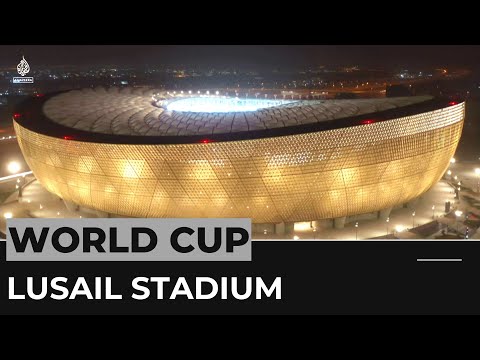
Pictured: Lusail Stadium in Qatar, #3 with 88,966 seats.
As of October 2026, and how it’s measured. Each figure is the official seated capacity of the stadium’s current configuration, as stated by the venue, its owner, the national federation or a government sports body, or, where none publishes one, the most consistently reported figure. Record attendances and temporary expansions don’t count. The list covers open-air and roofed venues built for field sports (football, cricket, athletics, baseball and multi-sport); motor-racing circuits, horse-racing tracks and indoor arenas are left out. “Asia” includes the Middle East (the Gulf states, Iran and Iraq) and Asian Turkey. Venues in European Russia and on Istanbul’s European side are on the Europe list instead, as is Azerbaijan’s Baku Olympic Stadium, whose national team plays in UEFA. Rungrado 1st of May Stadium’s capacity is not independently verified: 113,281 is the figure most often given since its 2014–15 refit, but quoted figures range up to 150,000, the official claim when it opened in 1989.[3][4] Lusail and Al Bayt are listed at their World Cup capacities because the reductions planned for after the tournament (to about 40,000 and 32,000) had not been made: Lusail held 84,517 for the December 2025 Arab Cup final, and Al Bayt 61,465 for the opening match.[5][6][7][24][25] Salt Lake Stadium’s 68,000 comes from India’s AFC Asian Cup 2027 bid; the 85,000 still quoted in some places predates its later renovation.[26] Eden Gardens’ 68,000 is the Cricket Association of Bengal’s figure, and some lists give 66,349.[27] Three large venues are left out because they are closed for rebuilding: Seoul Olympic Stadium (being refitted, with seating cut to about 60,000), King Fahd Sports City Stadium in Riyadh (closed since December 2023, being rebuilt for about 70,200) and Shah Alam Stadium in Malaysia.[32][33][34] Next in line are Daegu Stadium (66,422), Basra International Stadium (65,227) and the Shaheed Veer Narayan Singh International Cricket Stadium in Raipur (65,000).[34] Figures for ranks 11–20 come from each venue’s operator, club or government where published, otherwise from StadiumDB and Wikipedia.[21][22][23][28][29][30][31] Ties share a rank.
The Top 10
#1
Narendra Modi Stadium — 132,000 seats
The world’s largest cricket stadium, and the largest stadium of any kind by capacity, stands in Motera, Ahmedabad, on the site of the 1982 Motera stadium, which was demolished in 2015. The rebuilt ground, designed by Populous and owned by the Gujarat Cricket Association, opened in February 2020. It has 11 centre pitches, and LED lights along the roof’s inner edge instead of floodlight towers. Its biggest crowd so far was 111,989, for a Coldplay concert. The 2023 Cricket World Cup final drew 92,453.[1][2]
#2
Rungrado 1st of May Stadium — 113,281 seats
Pyongyang’s May Day Stadium opened on 1 May 1989 for the World Festival of Youth and Students. Its roof of 16 arches is meant to look like a magnolia blossom. It was claimed to hold 150,000 at opening, and after a refit that replaced benches with individual seats it reopened in 2015, with observers estimating about 114,000. Nobody outside North Korea has confirmed the exact number. It hosts the national football teams and the mass games, and in 2018 Moon Jae-in spoke to about 150,000 people there.[3][4]
#3
Lusail Stadium — 88,966 seats
Lusail Stadium, 15 km north of Doha, was the largest venue of the 2022 World Cup and hosted the final. The Qatar Football Association still lists it at 88,966 seats. The original plan was to remove much of the upper tier after the tournament, cutting it to about 40,000 and turning the space over to community uses, but this hadn’t happened as of December 2025. That month it drew 84,517 for the FIFA Arab Cup final.[5][6][7]
#4
Bukit Jalil National Stadium — 87,411 seats
Malaysia’s national stadium was finished on 1 January 1998 and staged the opening ceremony of that year’s Commonwealth Games in Kuala Lumpur. A 2017 refurbishment, designed by Populous, added an LED-lit facade and new seating. The venue counts 87,411 usable seats out of a 90,000 design capacity, which makes it the largest stadium in Southeast Asia. It is the home of the Malaysia national team and hosts AFF Championship finals and stadium concerts.[8][9]
#5
Jakarta International Stadium — 82,000 seats
Jakarta International Stadium (JIS), in Tanjung Priok, North Jakarta, opened in July 2022 and is home to Persija Jakarta. It was built for football, with no running track, and has a retractable ETFE roof, the first on an Indonesian football stadium. It cost about Rp 4.5 trillion (around US$312 million). The city of Jakarta owns it, and it is run by the city’s development company, PT Jakarta Propertindo.[10][11]
#6
Hangzhou Olympic Sports Centre Stadium — 80,800 seats
The “Big Lotus” on the Qiantang River was completed in 2018. Its steel shell is made of 28 large and 27 small petals. The Hangzhou city government gives it 80,800 fixed seats. It was the main stadium of the 2022 Asian Games, which were postponed to 2023, and hosted the opening and closing ceremonies, athletics and the men’s football final.[12][13]
#7
Guangdong Olympic Stadium — 80,012 seats
Built on the site of Guangzhou’s old Huangcun Airport, this stadium opened in 2001 and was meant to help host the 2008 Olympics before Beijing’s National Stadium was chosen instead. It has staged athletics at the 2010 Asian Games and the 2025 World Athletics Relays. New seats were fitted ahead of the opening ceremony of China’s 15th National Games, held there on 9 November 2025.[14][15]
#8
Beijing National Stadium (Bird’s Nest) — 80,000 seats
The Bird’s Nest was designed by Herzog & de Meuron and built from about 121,000 tons of Chinese steel. It held 91,000 at the 2008 Olympics. Around 11,000 temporary seats were then taken out, leaving about 80,000. It also hosted the opening and closing ceremonies of the 2022 Winter Olympics, which makes it the only stadium to stage the ceremonies of both a Summer and a Winter Games.[16]
#9
Azadi Stadium — 78,116 seats
Tehran’s Azadi Stadium opened in 1971 for about 100,000 spectators and has shrunk with each seating upgrade: 95,225 in 2003, 84,412 in 2012, and 78,116 once the upper tier was fully seated in 2016. It is home to the Iran national team and to Persepolis and Esteghlal. A strike in March 2026 hit the nearby Azadi Indoor Stadium; the main stadium, about 500 metres away, was not targeted.[17][18]
#10
Gelora Bung Karno Main Stadium — 77,193 seats
Jakarta’s Gelora Bung Karno was built for the 1962 Asian Games and once held around 110,000. That fell to 88,083 after a renovation for the 2007 Asian Cup. The overhaul for the 2018 Asian Games replaced the bench seating with 77,193 single flip-up seats and added evacuation routes and accessible routes. It remains the main home of the Indonesia national team.[19][20]
Sources
- Wikipedia, “Narendra Modi Stadium” — https://en.wikipedia.org/wiki/Narendra_Modi_Stadium
- ICC, “Narendra Modi Stadium” (Cricket World Cup venue guide) — https://www.icc-cricket.com/tournaments/cricketworldcup/venues/narendra-modi-stadium
- Wikipedia, “Rungrado 1st of May Stadium” — https://en.wikipedia.org/wiki/Rungrado_1st_of_May_Stadium
- StadiumDB, “Rungrado May Day Stadium” — https://stadiumdb.com/stadiums/pkr/rungrado_may_day_stadium
- Qatar Football Association, “Lusail Stadium” — https://www.qfa.qa/en/stadium-venue/lusail-stadium
- Wikipedia, “Lusail Stadium” — https://en.wikipedia.org/wiki/Lusail_Stadium
- Qatar News Agency, “FIFA Arab Cup Qatar 2025 draws over 1.2 million fans” — https://qna.org.qa/en/News-Area/News/2025-12/25/fifa-arab-cup-qatar-2025-draws-over-12-million-fans
- Wikipedia, “Bukit Jalil National Stadium” — https://en.wikipedia.org/wiki/Bukit_Jalil_National_Stadium
- New Straits Times, report on the 87,411-capacity Bukit Jalil National Stadium winning Stadium of the Year — https://nst.com.my/node/374217/amp
- Wikipedia, “Jakarta International Stadium” — https://en.wikipedia.org/wiki/Jakarta_International_Stadium
- StadiumDB, “Jakarta International Stadium” — https://stadiumdb.com/stadiums/idn/jakarta_international_stadium
- eHangzhou (Hangzhou municipal government), Hangzhou Olympic Sports Centre Stadium, 80,800 fixed seats (March 2025) — https://www.ehangzhou.gov.cn/2025-03/21/c_293039.htm
- Wikipedia, “Hangzhou Olympic Expo Center” — https://en.wikipedia.org/wiki/Hangzhou_Olympic_Expo_Center
- Wikipedia, “Guangdong Olympic Stadium” — https://en.wikipedia.org/wiki/Guangdong_Olympic_Stadium
- Wikipedia, “2025 National Games of China” — https://en.wikipedia.org/wiki/2025_National_Games_of_China
- Wikipedia, “Beijing National Stadium” — https://en.wikipedia.org/wiki/Beijing_National_Stadium
- Wikipedia, “Azadi Stadium” — https://en.wikipedia.org/wiki/Azadi_Stadium
- StadiumDB, “Iran: Tehran giant gets smaller once again” (2016) — https://stadiumdb.com/news/2016/09/iran_tehran_giant_gets_smaller_once_again
- Tirto.id, “Berapa kapasitas GBK?” — https://tirto.id/jelang-war-tiket-indonesia-vs-argentina-berapa-kapasitas-gbk-gLod
- Gelora Bung Karno (venue operator), “Stadion Utama Gelora Bung Karno” — https://reservation.gbk.id/venue/id_stadion-utama-gelora-bung-karno
- Wikipedia, “Naghsh-e Jahan Stadium” — https://en.wikipedia.org/wiki/Naghsh-e_Jahan_Stadium
- Yokohama F·Marinos, “Access” (Nissan Stadium capacity 72,327) — https://f-marinos.com/en/access
- IABSE, Shanghai Stadium renovation (58,000 to 72,000 seats) — https://iabse.org/page-18578
- Wikipedia, “Al Bayt Stadium” — https://en.wikipedia.org/wiki/Al_Bayt_Stadium
- Qatar Tribune, “FIFA Arab Cup Qatar 2025 gets underway in Qatar” — https://www.qatar-tribune.com/article/207501/latest-news/fifa-arab-cup-qatar-2025-gets-underway-in-qatar
- Wikipedia, “Salt Lake Stadium” (capacity cited to India’s AFC Asian Cup 2027 bid book) — https://en.wikipedia.org/wiki/Salt_Lake_Stadium
- The Daily Star, “Ganguly returns as CAB chief, sets sights on Eden expansion” — https://www.thedailystar.net/sports/cricket/news/ganguly-returns-cab-chief-sets-sights-eden-expansion-3992376
- The Stadium Business, “New-look Workers’ Stadium opens doors as fans return in China” — https://www.thestadiumbusiness.com/2023/04/17/new-look-workers-stadium-opens-doors-as-fans-return-in-china
- Tokyo Metropolitan Government, “Tokyo Sports Facilities: Japan National Stadium” — https://www.sports-tokyo-info.metro.tokyo.lg.jp/english/tokyoSportsFacilities/facility/02.html
- StadiumDB, “Yadegar-e Emam Stadium (Sahand Stadium)” — https://stadiumdb.com/stadiums/irn/yadegar_e_emam_stadium
- K League United, “Alternative K League 1 Table: Attendances” (Seoul World Cup Stadium, 66,704 seats) — https://www.kleagueunited.com/2019/09/alternative-k-league-1-table-attendances.html
- The Korea Times, “LG Twins, Doosan Bears to temporarily play at Olympic main stadium for 5 seasons” — https://www.koreatimes.co.kr/sports/20240709/lg-twins-and-doosan-bears-to-temporarily-play-at-olympic-main-stadium-for-5-seasons
- Saudipedia, “King Fahd Sport City Stadium” — https://saudipedia.com/en/king-fahd-sport-city-stadium
- Wikipedia, “List of Asian stadiums by capacity” — https://en.wikipedia.org/wiki/List_of_Asian_stadiums_by_capacity