Merck’s Keytruda was the world’s best-selling prescription drug in 2025, with $31.7 billion in sales. These are 12 drug brands ranked by company-reported global net sales for calendar year 2025. This is a ranking of revenue, not medical advice.
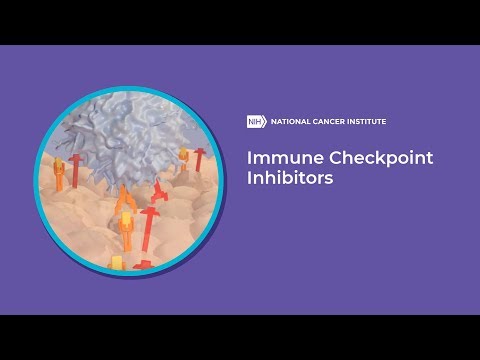
Pictured: a still from the National Cancer Institute’s “Immune Checkpoint Inhibitors”, an explainer on the drug class of Keytruda, which is #1 with $31.68 billion in 2025 sales.
Rank
Drug (active ingredient)
2025 sales (US$ billions)
2024 sales (US$ billions)
Change
Company
Therapeutic area
Approved for
First approved
1
Keytruda (pembrolizumab)
31.68
29.48
+7.5%
Merck & Co.
Oncology
Many cancers, including melanoma and lung cancer
2014
2
Mounjaro (tirzepatide)
22.97
11.54
+99.0%
Eli Lilly
Diabetes & obesity
Type 2 diabetes
2022
3
Eliquis (apixaban)
22.40
20.70
+8.2%
Bristol Myers Squibb + Pfizer
Cardiovascular
Stroke prevention in atrial fibrillation; blood clots
2012
4
Ozempic (semaglutide)
19.61
18.57
+5.6%
Novo Nordisk
Diabetes & obesity
Type 2 diabetes; cardiovascular risk reduction
2017
5
Dupixent (dupilumab)
18.12
15.08
+20.2%
Sanofi + Regeneron
Immunology
Eczema, asthma, nasal polyps, COPD and other type 2 inflammation
Jardiance family (empagliflozin, alone or combined)
13.56
12.98
+4.5%
Boehringer Ingelheim + Eli Lilly
Diabetes & obesity
Type 2 diabetes, heart failure, chronic kidney disease
2014
10
Zepbound (tirzepatide)
13.54
4.93
+174.9%
Eli Lilly
Diabetes & obesity
Chronic weight management; sleep apnea in obesity
2023
11
Wegovy (semaglutide)
~12.2
—
+36% (DKK)
Novo Nordisk
Diabetes & obesity
Chronic weight management; heart risk in obesity
2021
12
Opdivo / Opdivo Qvantig (nivolumab)
10.29
9.30
+10.6%
Bristol Myers Squibb
Oncology
Many cancers, including melanoma and lung cancer
2014
No matching rows.
Read this first: drugs are ranked by 2025 global net product sales in US dollars, as reported by the companies that sell them for calendar year 2025 in their fourth-quarter and full-year results, compiled in Genetic Engineering & Biotechnology News’s “Top 10 Best-Selling Drugs 2026” list (July 2026).[1] The top ten and their 2024 and change figures are GEN’s; each was checked against the company’s own release where it could be opened (Merck, Lilly, Novo Nordisk, Bristol Myers Squibb, Pfizer, AbbVie, Gilead, Regeneron).[2] Sales are what companies booked, not what patients paid, and they say nothing about how well a drug works. Co-marketed drugs: Eliquis (Bristol Myers Squibb $14.44 billion + Pfizer $7.96 billion) and the Jardiance family (Boehringer Ingelheim $10.13 billion + Lilly $3.43 billion) add both partners’ reported sales. Dupixent is booked by Sanofi, with Regeneron sharing profit, and Darzalex by Johnson & Johnson, with Genmab earning royalties, so neither is added twice. Counting one partner only would move Eliquis to about $14.4 billion. Shared molecules: semaglutide is sold as Ozempic, Wegovy and Rybelsus, and tirzepatide as Mounjaro and Zepbound. Each brand is ranked separately, as the companies report them, so Lilly’s two tirzepatide brands total about $36.5 billion and Novo’s Ozempic and Wegovy about $31.8 billion. Rows 11 and 12 go beyond GEN’s top ten: Wegovy is GEN’s #11, about $12.2 billion (DKK 79.1 billion in Novo Nordisk’s report, up 36% in kroner; no US-dollar 2024 figure was sourced, so its change is in kroner), and Opdivo is GEN’s #12, shown as Bristol Myers Squibb’s reported $10.05 billion plus $0.24 billion for Opdivo Qvantig, excluding the sales Ono Pharmaceutical books in Japan, South Korea and Taiwan.[4] GEN’s #13 to #15 (Trikafta, Ocrevus and Farxiga) are left out because their 2025 US-dollar figures were not all confirmed. Keytruda’s figure includes Keytruda Qlex, which Merck began reporting together with it in 2025. Dupixent’s 2025 total is $18.12 billion in GEN and $17.8 billion in Regeneron’s release, from different euro-to-dollar conversions of Sanofi’s €15.71 billion; GEN’s is shown for consistency with its 2024 figure. Ozempic’s 2024 base is GEN’s restated $18.57 billion. Approval years are the first US approval of the brand. This ranking is by revenue; for what Americans fill most often by prescription count, see The Most Prescribed Medications in the United States, where cheap generics such as atorvastatin and metformin lead.
The Top 10
#1
Keytruda — $31.68 billion
Merck’s pembrolizumab, a PD-1 immune checkpoint inhibitor, stayed the world’s best-selling drug in 2025. Merck now reports Keytruda and its new subcutaneous form, Keytruda Qlex, as one figure: $31.68 billion, up 7.5% from $29.48 billion and about half of Merck’s $65.0 billion in total sales. It was first approved in 2014 and is now used across many cancer types. Its core US patent protection is expected to end in 2028. The video is the National Cancer Institute’s explainer on immune checkpoint inhibitors, the drug class Keytruda belongs to; it is not about Keytruda alone.[1][2]
#2
Mounjaro — $22.97 billion
Eli Lilly’s tirzepatide for type 2 diabetes nearly doubled in a year, from $11.54 billion to $22.97 billion. Tirzepatide activates two gut-hormone receptors, GIP and GLP-1, and is sold under a second brand, Zepbound (#10), for weight management. The two brands are ranked separately here. Together they made about $36.5 billion, which would top Keytruda if counted as one drug. Lilly’s total 2025 revenue was $65.2 billion.[1][3] No suitable video from an authoritative channel was found, so the icon is shown instead.
#3
Eliquis — $22.40 billion
Apixaban, a blood thinner (factor Xa inhibitor) for stroke prevention in atrial fibrillation and for treating and preventing blood clots, was developed by Bristol Myers Squibb and Pfizer. Each books its own share of sales, so this table adds both: $14.44 billion from BMS plus $7.96 billion from Pfizer. Counting BMS alone would put Eliquis at $14.4 billion and lower in the ranking. The video is a Mayo Clinic explainer on atrial fibrillation, the main condition Eliquis treats, not a film about the drug.[1][4][5]
#4
Ozempic — $19.61 billion
Novo Nordisk’s semaglutide injection for type 2 diabetes grew 5.6% in US dollars, or 10% at constant exchange rates, to DKK 127.1 billion ($19.61 billion). It shares its molecule with Wegovy (#11, weight management) and the Rybelsus pill, which are not added to it here. Novo’s sales growth slowed as Lilly’s tirzepatide brands gained share. The video is Novo Nordisk’s explainer on the difference between GLP-1 and semaglutide.[1][6]
#5
Dupixent — $18.12 billion
Dupilumab blocks two signalling proteins, IL-4 and IL-13, involved in type 2 inflammation. It is approved for eczema, asthma, chronic sinus disease with nasal polyps and other conditions, including COPD. Sanofi records the global sales and Regeneron shares the profit, so the figure is not double-counted. GEN converts Sanofi’s €15.71 billion to $18.12 billion; Regeneron’s own release puts the 2025 total at $17.8 billion, up 26%. Either way Dupixent ranks fifth. The video is a Mayo Clinic explainer on eczema, one of its main uses.[1][7]
#6
Skyrizi — $17.56 billion
AbbVie’s risankizumab targets IL-23, a protein behind inflammation in psoriasis and bowel disease. Sales rose 49.9% from $11.72 billion, as it took over from AbbVie’s older drug Humira, whose 2025 sales fell to $4.54 billion. AbbVie’s own release gives the same $17.562 billion. The video is the brand’s official guide to using the injection pen, not a mechanism animation.[1][8]
#7
Darzalex / Darzalex Faspro — $14.35 billion
Johnson & Johnson’s daratumumab targets the CD38 protein on multiple myeloma cells, in an intravenous form (Darzalex) and a faster subcutaneous form (Darzalex Faspro). J&J books all sales, so $14.35 billion counts once; Genmab, which discovered the antibody, receives royalties that are not added. Sales rose 23.0% from $11.67 billion.[1][9] No suitable video from an authoritative channel was found, so the icon is shown instead.
#8
Biktarvy — $14.33 billion
Gilead’s once-daily single-tablet treatment for HIV-1 combines three medicines: bictegravir, emtricitabine and tenofovir alafenamide. Gilead reports sales up 7% to $14.3 billion, led by higher demand and offset by a lower average price. It was first approved in 2018.[1][10] No suitable video from an authoritative channel was found, so the icon is shown instead.
#9
Jardiance family — $13.56 billion
Empagliflozin, an SGLT2 inhibitor first approved for type 2 diabetes in 2014 and since used for heart failure and chronic kidney disease. Boehringer Ingelheim and Eli Lilly each report their share ($10.13 billion and $3.43 billion), so the total adds both, and it includes the combination pills Glyxambi, Synjardy and Trijardy XR. It is the one entry here counted as a family of products. The video is a Mayo Clinic explainer on type 2 diabetes.[1]
#10
Zepbound — $13.54 billion
Tirzepatide again, this time Lilly’s brand for chronic weight management in adults with obesity or overweight, and for sleep apnea in obesity. Sales grew 174.9% from $4.93 billion, the biggest jump of any drug in the table, as supply improved after the 2023 launch.[1][3] No suitable video from an authoritative channel was found, so the icon is shown instead.
Genetic Engineering & Biotechnology News (Alex Philippidis), Top 10 Best-Selling Drugs 2026, 9 July 2026: the ranking, 2025 and 2024 sales and percentage changes for ranks 1–10, and the #11–15 list. Cross-read against the One Day Advisor summary of the same data; Wikipedia’s list of largest selling pharmaceutical products uses different counting (for example Eliquis at $14.7 billion) and was not used for figures.
Company results for 2025, as opened or quoted in search results: Merck’s fourth-quarter and full-year 2025 release (Keytruda $31,641 million plus Keytruda Qlex $40 million).
Johnson & Johnson, fourth-quarter 2025 results (Form 8-K): Darzalex figure of about $14.4 billion was confirmed only through GEN and press coverage, not from the filing itself.
Gilead Sciences, fourth-quarter and full-year 2025 results: Biktarvy up 7% to $14.3 billion. The Jardiance family total ($13.563 billion) is GEN’s sum of Boehringer Ingelheim’s and Lilly’s reported sales; Boehringer’s own figure was not opened.
Videos: National Cancer Institute, Mayo Clinic, Novo Nordisk and the Skyrizi brand channel on YouTube; each ID was checked for channel and title. Four of them explain a drug class or condition rather than the drug, as noted in each entry.