Nature & Animals
The Largest Land Carnivores in the World
Polar bears, Kodiak bears and Siberian tigers top the list of the biggest meat-eating mammals on land, ranked by the typical weight of an adult male.
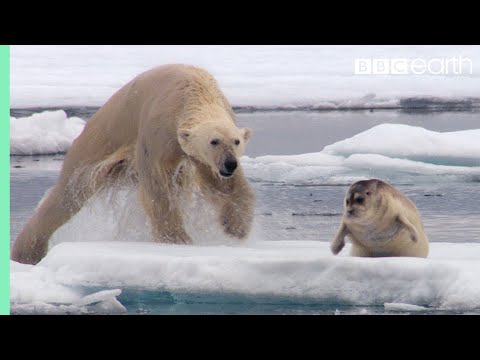
Pictured: a polar bear, #1 with a typical adult male mass of 470 kg.
Ranking rule: species are ordered by the midpoint of a published typical adult-male weight range (for example, polar bear 350–590 kg gives 470 kg), not by single record animals; the “Max recorded” column lists the heaviest credible wild weight found (a few are approximate or dressed weights, and Kodiak and lion have heavier captive records). Scope: only members of the order Carnivora that live mainly on land. Seals, sea lions, walruses and other marine mammals are excluded, but the polar bear is included, as is conventional, because it hunts and breeds on sea ice and shore. The giant panda is a carnivore by classification but eats almost only bamboo. The Kodiak bear is a subspecies of the brown bear, listed separately because it is far larger than inland grizzlies; the Siberian tiger is likewise a tiger subspecies. Ranges vary by source, population and season, and the closely packed bottom rows (ranks 11–15) could swap places on different sources. This list ends at 15 rows; other candidates such as the Bengal tiger, cougar and brown hyena fall below or near the cut-off or duplicate a listed species.[1]
The Top 10
#1
Polar Bear — 470 kg
The only bear that is truly marine-adapted still counts as a land carnivore by convention: it is classed as a marine mammal for legal purposes but spends most of its life on sea ice and shore, and is the largest living land carnivore. Males usually weigh 350 to 590 kg, and the heaviest on record, a male shot at Kotzebue Sound, Alaska, in 1960, weighed 1,002 kg.[1]
#2
Kodiak Bear — 453.5 kg
The Kodiak Archipelago's brown bears are the largest brown bears alive, fattened on salmon. Males are typically 272 to 635 kg, and peak autumn weights can reach about 680 kg. The largest wild male on record was 751 kg, while a captive male named Clyde at the Dakota Zoo reached 966 kg in 1987.[2]
#3
Brown Bear (Grizzly) — 270 kg
Grizzlies are the same species as Kodiak bears, but inland bears are much lighter: adult males average roughly 180 to 360 kg, depending on food supply. Coastal Alaskan males can top 700 kg, and the largest Alaska Peninsula bear on record, shot in 1948, was estimated at 725 to 771 kg.[3]
#4
Siberian (Amur) Tiger — 243 kg
The Siberian or Amur tiger is the largest living cat. Males typically weigh 180 to 306 kg, and early 20th-century records describe wild males of up to 384 kg, though modern wild tigers are generally lighter.[4]
#5
Lion — 200 kg
Lions are the only truly social big cat. Adult males typically weigh 170 to 230 kg (other references say 150 to 260 kg), and the heaviest wild male on record, a man-eater shot in South Africa in 1936, weighed about 313 kg. A captive male at Dublin Zoo reportedly weighed 375 kg.[5]
#6
Spectacled (Andean) Bear — 150 kg
South America's only bear species, found along the Andes, is the largest land carnivore in South America. Males are usually 100 to 200 kg, and the most massive reach roughly 220 kg. Despite its size it eats mostly plants, especially bromeliads and fruit.[6]
#7
Asian Black Bear — 130 kg
Also called the moon bear for the pale crescent on its chest, the Asian black bear is a strong climber that builds leafy nests in trees. Males typically weigh 110 to 150 kg, though autumn weights run higher, and some references give 100 to 200 kg.[7]
#8
Sloth Bear — 112.5 kg
Sloth bears of India and Sri Lanka feed mainly on termites and ants, sucking them out of mounds with a gap in their front teeth. Males are typically 80 to 145 kg, with exceptional males reaching 192 kg, and mothers famously carry their cubs on their backs.[8]
#9
Giant Panda — 107.5 kg
Caveat: the giant panda is a bear by taxonomy and a carnivore by ancestry, but about 99 percent of its diet is bamboo, so it is ranked here on classification rather than on diet. Males typically weigh 100 to 115 kg, with large individuals reaching 160 kg. It was downlisted from Endangered to Vulnerable by the IUCN in 2016.[9]
#10
American Black Bear — 100 kg
The most common bear in the world is also surprisingly variable: adult males average 60 to 140 kg in most populations, but well-fed bears can exceed 300 kg. The record, a male shot in New Brunswick in 1972, weighed 409 kg dressed, an estimated 500 kg in life.[10]
Sources
- Polar bear: Polar Bears International, "Polar Bear Facts" (polarbearsinternational.org); International Association for Bear Research and Management (IABR), "Ursus maritimus" (bearbiology.org); Guinness World Records, "Largest carnivore on land" (guinnessworldrecords.com); Wikipedia, "Polar bear" (1,002 kg record).
- Kodiak bear: North American Bear Center, "Kodiak Bears" (bear.org); Wikipedia, "Kodiak bear" (weight range, 751 kg wild and 966 kg captive records).
- Brown bear / grizzly: U.S. Fish and Wildlife Service, "Grizzly bear" species profile (fws.gov); Animal Diversity Web, "Ursus arctos" (animaldiversity.org); Wikipedia, "Alaska Peninsula brown bear."
- Siberian tiger: International Environment Library Consortium (San Diego Zoo Global) Tiger fact sheet (ielc.libguides.com); Encyclopaedia Britannica, "Siberian tiger" (britannica.com); WWF, "Tiger" (worldwildlife.org).
- Lion: Encyclopaedia Britannica, "Lion" (britannica.com); National Geographic, "African lion" (nationalgeographic.com); Wikipedia, "List of largest cats" (313 kg and 375 kg records).
- Spectacled bear: San Diego Zoo, "Andean (Spectacled) Bear" (animals.sandiegozoo.org); Bear Conservation, "Andean (spectacled) bear" (bearconservation.org.uk); Wikipedia, "List of largest land carnivorans."
- Asian black bear: IABR, "Ursus thibetanus" (bearbiology.org); Animal Diversity Web, "Ursus thibetanus" (animaldiversity.org); Wikipedia, "Asian black bear."
- Sloth bear: IABR, "Melursus ursinus" (bearbiology.org); Wikipedia, "Sloth bear" (192 kg upper figure; IUCN Vulnerable).
- Giant panda: Wikipedia, "Giant panda"; San Diego Zoo Wildlife Alliance, "Endangered No More: Giant Pandas Are Now Vulnerable" (sandiegozoowildlifealliance.org); Smithsonian's National Zoo (nationalzoo.si.edu).
- American black bear: IABR, "Ursus americanus" (bearbiology.org); Wikipedia, "American black bear" and "Meatball (bear)" (409 kg New Brunswick record).
- Ranks 11–15: Wikipedia and Animal Diversity Web species accounts for the jaguar, sun bear (Sun bear), leopard (animaldiversity.org) and spotted hyena (animaldiversity.org); IELC Spotted Hyena fact sheet (ielc.libguides.com); Encyclopaedia Britannica, "Gray wolf" (britannica.com) and IELC Gray Wolf fact sheet.
- IUCN Red List categories are the species-level status shown on each species’ account page above; subspecies rows (Kodiak, Siberian tiger) carry the status of their parent species.