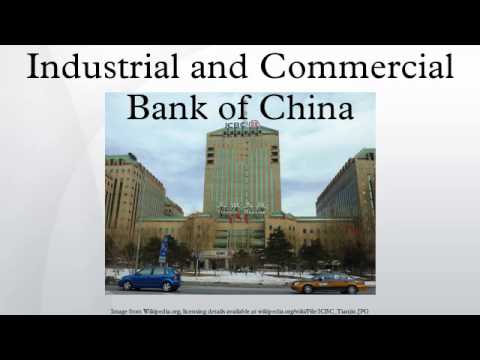
Pictured: ICBC, #1 with $7.65 trillion in total assets.
Rank
Bank
Total assets
Country
1
ICBC
$7.65T
China
2
Agricultural Bank of China
$6.97T
China
3
China Construction Bank
$6.52T
China
4
Bank of China
$5.50T
China
5
Postal Savings Bank of China
$2.76T
China
6
Mitsubishi UFJ Financial Group
$2.72T
Japan
7
Bank of Communications
$2.20T
China
8
Sumitomo Mitsui Financial Group
$1.98T
Japan
9
Mizuho Financial Group
$1.83T
Japan
10
China Merchants Bank
$1.79T
China
11
State Bank of India
$725B
India
12
DBS Bank
$667B
Singapore
13
OCBC Bank
$625B
Singapore
14
KB Financial Group
$553B
South Korea
15
Shinhan Financial Group
$533B
South Korea
No matching rows.
The Top 10
#1
ICBC — $7.65 trillion
Beijing-based and majority state-owned, ICBC has ranked as the world's largest bank by total assets for more than a decade running, a streak unmatched by any other lender in the region. It was created in 1984 when Beijing split commercial lending off from the People's Bank of China, which until then had also functioned as the country's only bank.[1]
#2
Agricultural Bank of China — $6.97 trillion
Agricultural Bank of China maintains the widest branch network of any Chinese lender, a legacy of its founding mandate to bring banking services to the country's rural provinces. Its lineage traces back to 1951, though the bank was twice folded into the People's Bank of China before being permanently reestablished in 1979 as part of China's post-Mao banking reforms.[1]
#3
China Construction Bank — $6.52 trillion
China Construction Bank grew alongside the country's building boom and remains the dominant force in Chinese mortgage lending and infrastructure finance. It was chartered in 1954 as the People's Construction Bank of China and didn't take its current name until 1996.[1]
#4
Bank of China — $5.50 trillion
Tracing its founding to 1912, Bank of China is the region's oldest continuously operating bank and its most internationally connected, with branches across more than 60 countries and territories. It's also one of just three banks licensed to issue Hong Kong dollar banknotes, a privilege it has held since 1994.[1]
#5
Postal Savings Bank of China — $2.76 trillion
Built on China's postal service network, PSBC operates one of the largest branch footprints of any bank in the world, with a particular focus on rural and small-town customers. Its postal-savings roots reach back to 1919, though the bank wasn't established in its current corporate form until 2007.[1]
#6
Mitsubishi UFJ Financial Group — $2.72 trillion
Japan's largest bank by assets, Mitsubishi UFJ Financial Group was formed in a 2005 merger between the Mitsubishi Tokyo and UFJ banking groups and now operates in more than 40 markets worldwide, making it Japan's most internationally active lender. It also became one of Morgan Stanley's largest shareholders after investing $9 billion in the American bank during the 2008 financial crisis, a stake it still holds today.[1]
#7
Bank of Communications — $2.20 trillion
One of China's oldest banks, tracing its founding to 1908, Bank of Communications is generally counted among the country's "Big Five" state-controlled lenders, though its asset base is a fraction of the four giants that dominate the top of this list. HSBC acquired a nearly 20% stake in the bank in 2004, at the time the largest single foreign investment in a Chinese mainland lender.[1]
#8
Sumitomo Mitsui Financial Group — $1.98 trillion
Formed in a 2002 merger between Sumitomo Bank and Sakura Bank, itself a descendant of the historic Mitsui Bank, Sumitomo Mitsui Financial Group traces its corporate lineage back roughly 400 years, making it one of the oldest continuously operating financial names in the region. That lineage runs through the Sumitomo family's Besshi copper mine on the island of Shikoku, worked from 1691 to 1973, whose profits helped build the zaibatsu conglomerate that eventually became the modern bank.[1]
#9
Mizuho Financial Group — $1.83 trillion
Mizuho was created in 2000 through the merger of three major Japanese banks — Dai-Ichi Kangyo Bank, Fuji Bank, and the Industrial Bank of Japan — rounding out the trio of Japanese megabanks, alongside MUFG and Sumitomo Mitsui, that dominate the country's banking sector. The newly merged bank suffered a major computer systems failure in 2002 that disabled ATMs nationwide, and a second in 2011, prompting a full system overhaul that wasn't completed until 2019.[1]
#10
China Merchants Bank — $1.79 trillion
The largest of China's joint-stock commercial banks rather than one of the state-owned "Big Four," China Merchants Bank built its reputation on retail and wealth-management banking, and its credit-card and private-banking businesses are consistently among the most profitable in the country. Founded in 1987, it was the first Chinese bank wholly owned by corporate shareholders rather than the state, and it listed on the Shanghai and Hong Kong exchanges in 2002 and 2006 respectively.[1]
S&P Global Market Intelligence, "Asia-Pacific's 50 largest banks by assets, 2026," ranked by total assets as of December 31, 2025 (figures in USD); founding dates and corporate history aggregated from each bank's own published history pages and financial-press reporting.
Company-reported total assets from year-end 2025 annual reports (State Bank of India, DBS Group, OCBC Bank, KB Financial Group, Shinhan Financial Group), converted to USD at year-end 2025 exchange rates.