Tech & Data
U.S. States Where Delivery Robots Are Legal in 2026
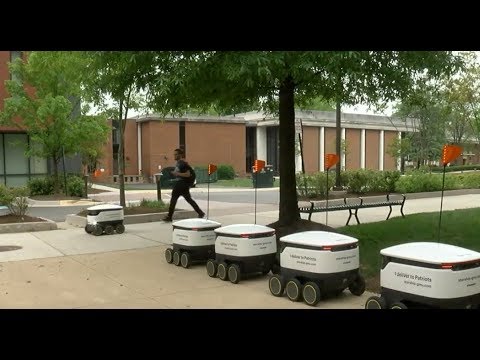
Knee-high robots rolling down the sidewalk with your takeout used to be a novelty. Since Virginia went first in 2017, a long list of states have passed laws that treat these “personal delivery devices” (PDDs) more or less like pedestrians. This unranked list covers the 23 state-level PDD laws we could confirm, with the region, the year each law was enacted, the bill, its weight limit, its sidewalk speed limit and whether the robots may also use the road. Weight and speed limits are as written in each law when it passed, plus later amendments where noted; several early laws have since been loosened, so check the current statute before you deploy anything. Cities can also have their own rules (San Francisco, for example, regulates sidewalk robots on its own), and this list covers only state laws.
South
Virginia
Virginia's identical bills SB 1207 and HB 2016 made it the first state to legalize sidewalk delivery robots. The governor signed SB 1207 on February 24, 2017, and it took effect that July 1. Starship Technologies called the law “pioneering.” The robots were capped at 50 pounds and 10 mph, had to yield to pedestrians, and were not legally “vehicles,” though any locality could still ban them.[1] In 2020, SB 758 raised the weight limit tenfold to 500 pounds, a change widely reported as clearing the way for Amazon's Scout robots. Virginia law now also lets robots drive along the side of roads with a speed limit of 25 mph or less.[2]
West
Idaho
Idaho was close behind: HB 204 was signed on March 24, 2017 and took effect July 1. It allowed electric robots under 80 pounds, with a 10 mph top speed, to run with or without a person actively controlling or monitoring them. Starship, whose 40-pound robot fits easily under that cap, helped pass both the Virginia and Idaho laws. Critics said the weight limit shut out heavier rivals, such as Marble's robot, which weighed more than 80 pounds.[3]
Midwest
Wisconsin
In June 2017, Governor Scott Walker signed 2017 Wisconsin Act 13, making Wisconsin the third state with a PDD law. Starship helped introduce it too. The robots have to stay under 80 pounds and 10 mph, use roads only to cross at crosswalks, obey every traffic signal, and yield to pedestrians, and a human operator has to be controlling or monitoring each one.[4]
Midwest
Ohio
Ohio legalized delivery robots without a bill of their own. Lawmakers put the rules into the 2017 state budget that Governor John Kasich signed, making Ohio the fifth state with a PDD law. Robots under 90 pounds and 10 mph can use sidewalks and crosswalks, as long as a human is monitoring them at all times and can shut them down remotely. The rules took effect September 29, 2017.[5]
West
Washington
Washington's 2019 law, HB 1325, has the lowest speed limit on this list. Robots have to stay under 120 pounds and can go no faster than 6 mph, about a brisk jog. Governor Jay Inslee signed it on April 30, 2019. Robots stay on sidewalks and crosswalks and can use the edge of the road only where there's no usable sidewalk and the speed limit is under 45 mph.[6]
Northeast
Pennsylvania
Pennsylvania's Act 106 of 2020 became law on November 1, 2020 without Governor Tom Wolf's signature. It allows the heaviest robots on this list, up to 550 pounds before cargo, and legally classifies them as pedestrians. They can go up to 12 mph in pedestrian areas and 25 mph on roads. Unlike most states, Pennsylvania also requires each operator to get authorization from PennDOT before putting robots on the street.[7]
South
Georgia
Georgia's HB 1009, signed by Governor Brian Kemp on May 2, 2022, allows big robots but originally made them slow on sidewalks. A robot can weigh up to 500 pounds empty or 600 pounds loaded, but the original sidewalk limit was just 4 mph. Robots may also use roads with speed limits of 45 mph or less. A later law raised the sidewalk speed limit.[8]
South
Tennessee
Tennessee's 2020 law, SB 2836, kept robots to pedestrian areas at up to 10 mph and required $100,000 in liability insurance. In 2026, lawmakers passed HB 1684 and Governor Bill Lee signed it, taking effect July 1. Robots with working headlights can now go up to 20 mph in bike lanes, on road shoulders and in parking lots. DoorDash, which is rolling out its own delivery robot, Dot, publicly backed the update.[9]